
HRC Playbook: LGBTQ+ Hiring for U.S. Finance Employers and Candidates
September 15, 2026
If you’re job hunting, go straight to specialist platforms and check three signals before you apply: HRC Corporate Equality Index status, published benefits, and a real Employee Resource Group. If you’re hiring, benchmark against the CEI, audit your job descriptions and applicant tracking system for bias, and put diverse panels and skills-based tests in front of every candidate. Everything else in LGBTQ+ hiring in finance builds on those two moves.
Where LGBTQ+ Professionals Find Finance Jobs
Generic job boards bury inclusive employers under thousands of listings with no way to verify their claims. Specialist platforms flip that: myGwork curates listings from companies that have already committed to LGBTQ±friendly practices, and pairs job postings with employer profiles, mentorship programs, and community events so candidates can vet a company before ever submitting a résumé.
Affinity conferences and career expos matter more in finance than in most industries, because the sector’s biggest employers use these events specifically to recruit. Reunion of Black MBAs, Out & Equal Workplace Summit, and sector career fairs draw the same firms that show up on the Corporate Equality Index, and attending gives candidates face time with actual hiring managers rather than an applicant tracking system.
A handful of signals in a job listing tell you more than any “we value diversity” tagline:
- Explicit nondiscrimination language covering gender identity and sexual orientation, not just a generic EEO clause
- Named benefits like trans-inclusive health coverage or partner benefits
- A mention of an active ERG, not just a diversity statement
- Public CEI participation or a stated benchmarking score
Remote and hybrid roles have widened the map for candidates who don’t live near a major finance hub. A candidate in a state with weaker protections can now interview for and take a fully remote role at a firm headquartered somewhere with stronger nondiscrimination law, which has quietly reshuffled who gets access to the best inclusive employers.
How Finance Employers Build an Inclusive Hiring Process
Start with the benchmark, then work backward into your funnel. Firms that treat the HRC Corporate Equality Index as a scoring exercise miss the point. It’s a roadmap: publish a measurable goal tied to it, not just a badge.
- Benchmark and commit publicly. Set a target CEI score or specific policy gaps to close within the year, and say so on your careers page.
- Extend sourcing beyond your usual pipeline. List roles on specialist platforms, involve your ERG in referral outreach, and give sourcing windows extra time rather than closing reqs the moment a “good enough” pool appears.
- Rebuild the selection stage around evidence, not gut feel. Blind résumé review for the first cut, standardized skills assessments, and diverse interview panels scored against a shared rubric. Financial services recruiters overwhelmingly agree removing bias from interviews is the single most effective lever for improving diversity outcomes, according to eFinancialCareers research.
- Offer benefits candidates actually check. Trans-inclusive care, equitable parental leave, and a clearly published harassment-reporting process, advertised on the job listing itself, not buried in an employee handbook.
- Prepare for the questions candidates will ask. Interviewers should be ready to answer specifics on benefits and ERG activity without stumbling. A red flag worth tracking internally: if your hiring managers can’t answer these questions consistently, your policy exists on paper only.
- Audit your ATS and job descriptions. Wording that skews masculine, credential requirements with no real bearing on the job, and keyword filters that penalize nontraditional career paths all quietly screen out strong candidates before a human ever sees the résumé, a pattern flagged repeatedly in inclusive hiring research.
Pro Tip: A high corporate CEI score doesn’t guarantee an inclusive experience on every desk. CFA Institute practitioner guidance points out that culture varies team by team, so audit the specific unit that’s hiring, not just the company-wide score.
Getting the sourcing funnel right matters as much as the interview stage. Firms rebuilding their inclusive talent pipeline often find the biggest bias sits earlier than anyone expected, in the initial screening pass.
What Should LGBTQ+ Candidates Check Before Applying?
Before you send a résumé, spend ten minutes checking whether the employer’s commitment is real or decorative. Look for CEI participation, a published benefits list, ERG activity you can actually verify, and leadership that includes openly LGBTQ+ people in visible roles, not just a Pride logo in June.
- Confirm nondiscrimination policy language covers gender identity, not only sexual orientation
- Search for an active ERG with public events or LinkedIn presence
- Check whether senior leadership includes openly LGBTQ+ executives
- Read the benefits page for partner and trans-inclusive coverage before you apply, not after an offer
When you apply, lead with transferable finance skills first. Save personal details for when you’re comfortable, not because you should hide who you are, but because the interview is the better venue to gauge how a company actually responds. During interviews, ask direct questions: who runs the ERG, how reporting complaints works, and whether the interview panel itself reflects any diversity. A panel that’s uniformly homogeneous tells you something a job posting never will.
Pay transparency is your leverage in negotiation. Ask what the posted band is and hold the line against a lowball offer justified by “market rate,” since pay-transparency practices have been shown to narrow gaps that vague negotiation processes tend to widen.

Pro Tip: If a recruiter can’t name a single concrete benefit or policy beyond “we’re an inclusive employer,” treat that as your answer. Specificity is the tell.
What the Data Says About Inclusive Hiring Outcomes
Numbers back up what candidates already sense in interviews. Recent polling found that many respondents pay close attention to how a company talks about LGBTQ+ inclusion when weighing job opportunities, according to The Harris Poll’s Inclusive Insights research. Vague statements no longer move the needle the way they once did.
myGwork’s own platform data adds weight to that pattern:
- The platform has recruited thousands of candidates for partner employers while measurably reducing recruitment costs for participating organizations
- A myGwork graduate survey found that 1 in 3 LGBTQ+ graduates are reconsidering their career paths amid recent political and social shifts, a signal employers can’t afford to ignore
Pay-transparency programs tracked through myGwork correlate with a 7% reduction in the wage gap for LGBTQ+ workers, evidence that transparency policies do more than look good on a careers page. They change outcomes.
Employers who partner with specialist platforms typically see better candidate matching too, because the applicant pool has already self-selected for cultural fit rather than arriving cold from a mass job board. That translates into stronger employer branding and fewer mismatched hires down the line, a pattern consistent with what supportive workplace climate research links to lower turnover overall.
What Employers Keep Getting Wrong About This
Most finance firms treat LGBTQ+ hiring as a statement problem: write the right words, post the right badge, done, rather than focusing on strategic approaches like those outlined in Thriving in business: strategies for the LGBTQ+ entrepreneur. That’s backwards. The data on hostile versus supportive climates shows the mechanism runs through daily experience, not messaging. A firm can score well on paper and still lose talent because one desk manager makes casual comments nobody flags.
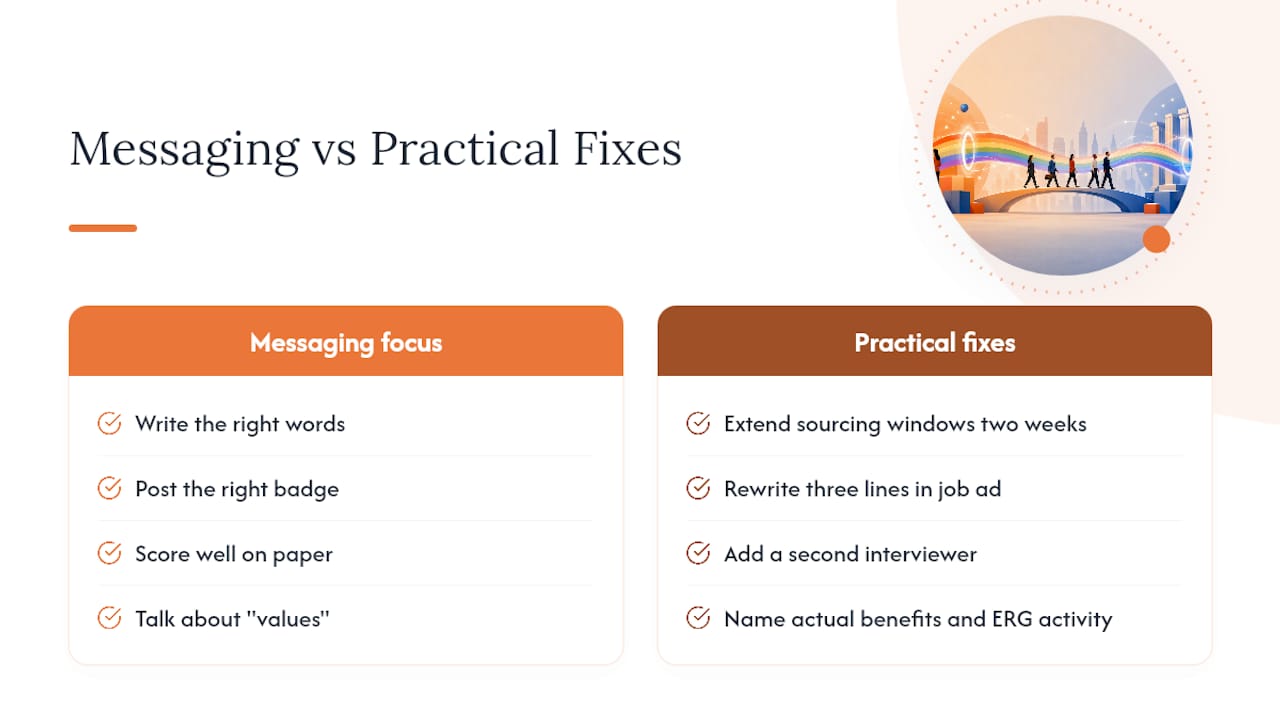
What actually moves the needle is unglamorous. Extending sourcing windows by two weeks. Rewriting three lines in a job description. Adding a second interviewer to a panel that used to be one person’s call. None of that shows up in a press release, but all of it shows up in retention numbers eventually.
The gap I keep seeing between employer intention and candidate experience comes down to specificity. Employers who name their actual benefits, actual ERG activity, and actual reporting process outperform employers who talk about “values” every time. Candidates have gotten good at telling the difference, and the data on pay transparency and hiring signals backs that instinct up.
How myGwork Connects Inclusive Employers With Finance Talent
Mygwork is the platform built specifically for this problem: connecting LGBTQ+ finance professionals with employers who can prove their commitment, not just claim it. For employers, that means employer branding tools, targeted job postings, and talent-sourcing access that puts your openings in front of a pool already screened for genuine interest in inclusive workplaces. For jobseekers, it means specialist listings, mentorship connections, community events, and employer profiles you can actually vet before you apply.
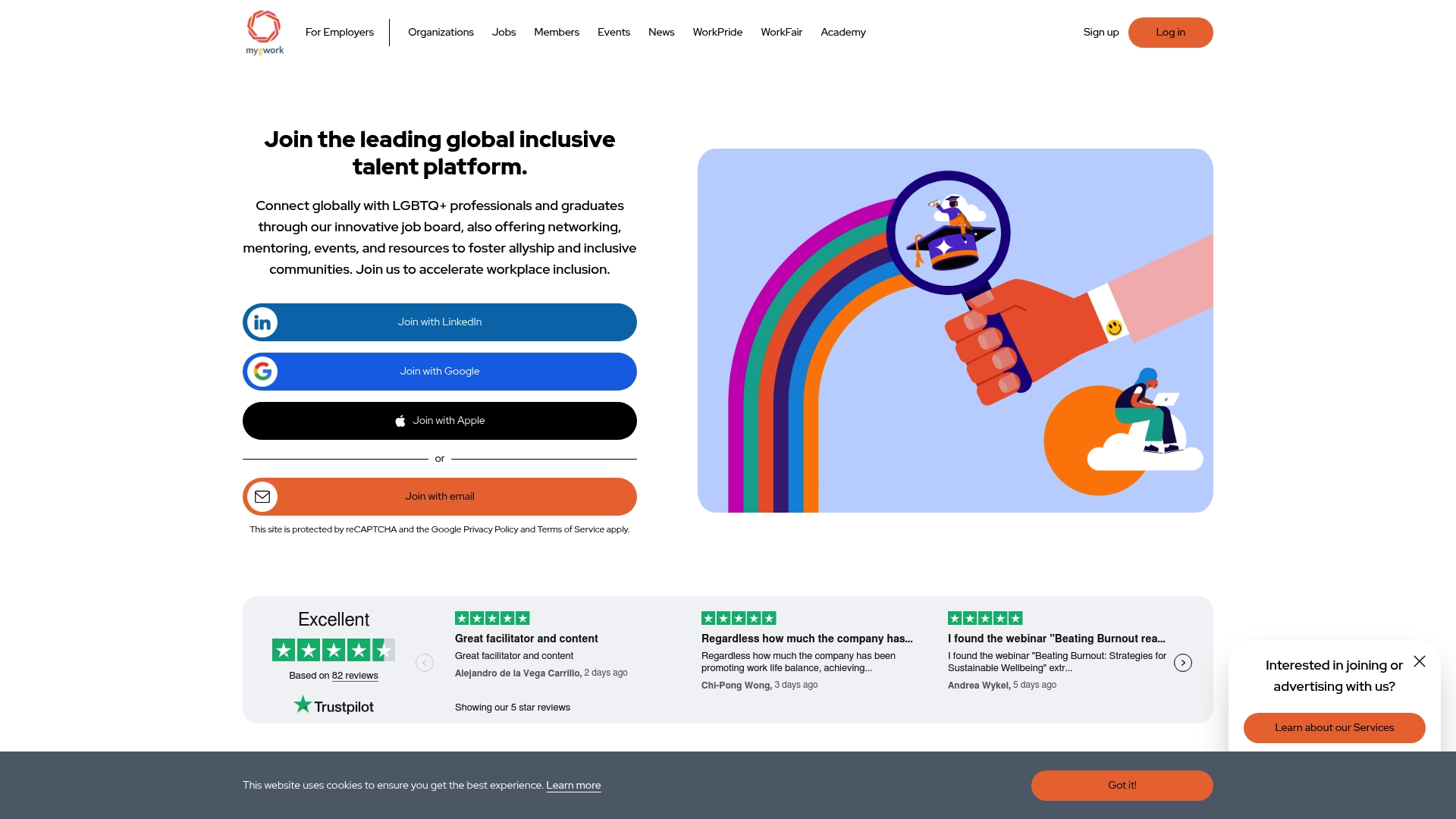
Getting started takes minutes on either side. Employers can post a job or set up an employer profile to start reaching candidates who are already looking for exactly what you offer. Jobseekers can create a profile, browse curated listings, and tap into mentorship and networking without wading through generic job boards that offer no way to verify a company’s promises.