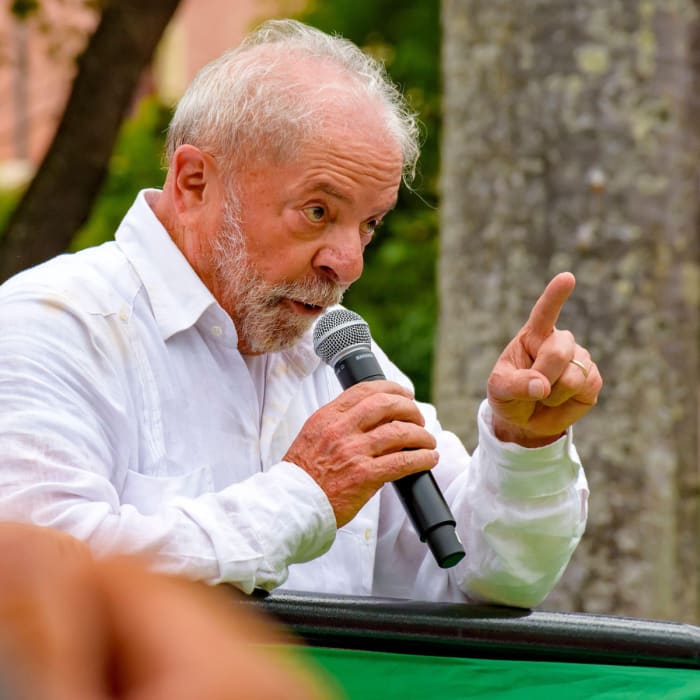
Lula Wins a Fourth Term. Here's Why That Matters for LGBTQ+ Brazil
October 26, 2026Luiz Inácio Lula da Silva was re-elected President of Brazil last night, beating Senator Flávio Bolsonaro by around 52% to 48% in a runoff that most polls had too close to call. He lost the first round on 4 October. No one in modern Brazilian history has done that and then won the second. He is 80, will be sworn in on 5 January, and this is his fourth term.
For LGBTQ+ Brazilians, and for anyone with staff or business in the country, the result matters more than the margin suggests.
What was on the ballot
Flávio Bolsonaro is the son of Jair Bolsonaro, the former president now serving 27 years for plotting a coup after his 2022 defeat. During his four years in office, the elder Bolsonaro dismantled most of the federal government's LGBTQ+ policy work, abolished the human rights secretariat's LGBT unit and spent a lot of airtime on what he called "gender ideology" in schools. Flávio promised to pardon his father if elected.
On LGBTQ+ issues specifically, the two candidates' manifestos could not have been more different. Lula's included measures to combat discrimination. Flávio's did not mention LGBTQ+ people at all, but did include a ban on trans athletes in women's sport at every level, from youth to elite, alongside a general commitment to the "traditional family" and "moral and religious values". For a community that lived through 2019 to 2022, the direction of travel was clear enough.
One voter put it to the Associated Press on election night at an LGBTQ+ bar in Rio: she couldn't think of anything worse than Flávio winning.
What Lula has actually done
Lula's record is not the record of an activist, and his coalition includes evangelical and centre-right parties that pull the other way. But in his third term he restored the institutional machinery that Bolsonaro had taken apart. The Ministry of Human Rights and Citizenship was brought back with a dedicated LGBTQIA+ rights secretariat, headed by a trans woman, and the national council that coordinates anti-discrimination policy was reinstated. That infrastructure is not glamorous, but it is what decides whether a complaint about a hate crime goes anywhere, whether trans people can update their documents without a fight, and whether public health programmes reach the people who need them.
It also matters because of what Brazil's courts have done. Same-sex marriage has been legal since 2013 and homophobia and transphobia have been criminalised since 2019, both through the Supreme Court rather than Congress. Those protections only work if the executive branch is willing to enforce them. Under Bolsonaro it was not. Under Lula it has been.
Brazil remains a dangerous place to be trans. For over a decade ANTRA, the national trans association, has recorded more murders of trans people in Brazil than in any other country. A government that counts those deaths and funds the response is not a solution, but it is the precondition for one.
A Congress with more LGBTQ+ members than anywhere else in the Americas
The other story from this election is below the presidency. VoteLGBT, which tracks LGBTQ+ candidates in Brazil, counted 529 running this year, more than 100 of them trans or travesti. According to the group, 14 openly LGBTQ+ members will sit in the new Congress from February, the most of any country in the Americas.
Among them: Erika Hilton, a travesti congresswoman from São Paulo, re-elected with nearly 1.6 million votes, the most any woman has ever received for the Brazilian Chamber of Deputies. Thabatta Pimenta became the first trans woman from the north-east elected to Congress. Samanda de Lula, a lesbian from Lula's own Workers' Party, won a Senate seat. More than 20 LGBTQ+ candidates won seats in state assemblies.
Not every result went that way. Fabiano Contarato, a gay senator, lost his seat, and Jean Wyllys, who fled Brazil in 2019 after death threats, failed in his comeback bid. But the overall picture is of a community that is more visible in Brazilian politics than it has ever been.
The limits
Lula himself was blunt about the obstacle ahead. "I do not choose the Congress," he said in his victory speech, acknowledging that the legislature elected this month is the most right-wing in recent memory. Bolsonaro has refused to concede and says he will seek to annul the result over a two-hour voting extension ordered by the Supreme Court. The Trump administration, which put 50% tariffs on Brazilian goods last year in support of the Bolsonaro family, has not yet reacted.
So this is not a result that delivers new rights. What it delivers is four more years in which the rights that exist are defended rather than attacked, and in which the people whose job it is to protect LGBTQ+ Brazilians will have a government behind them.
Why it matters for employers
Brazil is the largest economy in Latin America and a major hub for international companies. For employers with Brazilian staff, the practical difference is this: inclusion policies, Pride activity and ERG work in Brazil will continue to operate inside a legal framework that protects LGBTQ+ people and a government that enforces it. Given what is happening in Senegal, and the pressure on corporate inclusion in the US, that is not something to take for granted.
Sources: Al Jazeera, Washington Blade, Agência Diadorim, Associated Press, 25–26 October 2026