
Why Measure Diversity Progress: a Guide for Organizations
May 19, 2026Good intentions do not produce equity. Many organizations launch diversity programs with real enthusiasm, set hiring targets, run awareness campaigns, and then assume the work is done. But without measuring diversity progress, you have no way to know whether anything has actually changed. The gap between effort and impact is where most DEI initiatives quietly stall. This article explains why tracking diversity outcomes matters, which metrics reveal the most meaningful picture, how to turn data into decisions, and what stands in the way of doing this well.

Why measuring diversity progress is non-negotiable
There is a version of DEI work that looks productive from the outside but changes very little internally. Organizations hire more women into entry-level roles and call it progress. They add a pride filter to their LinkedIn logo in June and consider the box checked. The problem is that measurement moves organizations beyond assumptions and toward data-driven, intentional action.
The importance of tracking diversity cannot be overstated when you consider what stays invisible without it. Promotion rates for underrepresented groups. Attrition patterns concentrated in specific departments. Pay disparities that persist even after adjusted base salaries look fair. These are not hypothetical issues. They are structural realities that surface only when you actively look for them.
“Publishing diversity dashboards with explanations about what the numbers mean and what actions are planned improves stakeholder understanding and builds trust.” WomenTech Network
Transparency is the mechanism that makes measurement matter to people beyond the HR team. When employees can see that leadership is tracking and responding to diversity data, it signals that the organization takes inclusion seriously as a business discipline. And the demand for that signal is real. 76% of workers support their organization’s DEI efforts, which means most employees are watching to see whether those efforts are backed by accountability.
- Measurement creates a baseline so you know where you actually started, not where you assumed you were.
- It reveals whether specific groups are stalling at the same career stages, pointing to structural rather than individual explanations.
- It gives leadership a way to assess whether interventions are working or need redesigning.
- Public reporting builds credibility with job candidates, investors, and clients who increasingly make decisions based on inclusion track records.
Pro Tip: When sharing diversity metrics externally, always pair numbers with narrative. Explain what the data shows, what it does not show, and what your organization is doing about it. Raw percentages without context invite misinterpretation and erode the trust you are trying to build.
Common diversity metrics and how to use them

Not all diversity metrics are created equal. Organizations that focus exclusively on representation numbers, the percentage of women, people of color, or LGBTQ+ employees in their workforce, get only a surface reading of a much more complex situation.
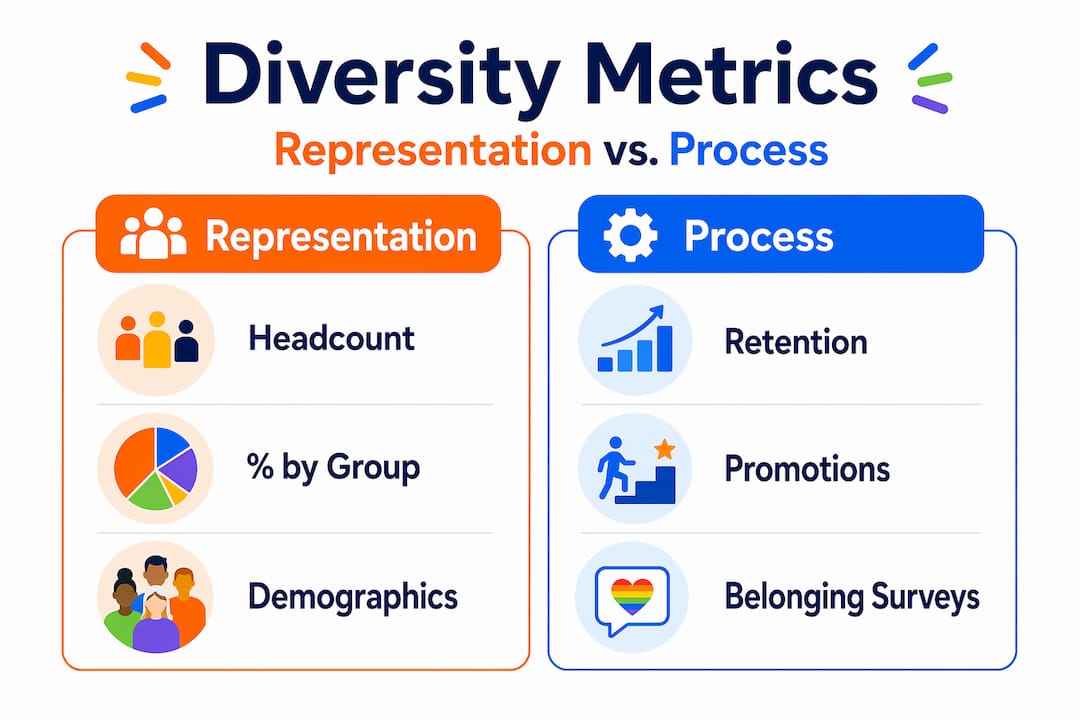
Representation vs. process metrics
Representation metrics tell you who is in the building. Process metrics tell you what happens to them once they get there. Stage-by-stage selection rates and promotion likelihood by demographic group are far more diagnostic. Research shows that evaluating candidates jointly rather than separately can increase promotion likelihood for underrepresented groups by 16.2%. That kind of finding only becomes visible when you track process metrics with enough granularity.
The intersectionality problem
Measuring diversity without accounting for intersectionality produces a distorted picture. A company might report strong overall representation of women and strong representation of Black employees, yet have almost no Black women in senior roles. That gap becomes invisible when you look at single-axis data. Intersectional frameworks in DEI measurement correct for this by cross-analyzing multiple dimensions of identity simultaneously.
Qualitative data paired with quantitative surveys captures psychological safety and belonging in ways that headcount numbers never will. Anonymous pulse surveys, focus groups, and stay interviews surface recurring inclusion issues that would otherwise stay hidden. The key is aggregating responses so that individuals in small demographic groups cannot be identified from their answers.
Pro Tip: Run quarterly belonging pulse surveys with no more than five questions and share the aggregated results back to employees within 30 days. Closing that feedback loop is what turns a survey from a data collection exercise into a trust-building act.
Using diversity data to set goals and drive real change
Data without a plan is just reporting. The real value of measuring diversity outcomes comes from using the findings to prioritize specific interventions and assign clear ownership.
One of the most practical frameworks for this is the impact-effort-confidence matrix. Here is how it works in practice:
- List your identified gaps. After analyzing your metrics, document specific disparities. For example: “Black employees are leaving at twice the rate of white employees in the first two years.”
- Score each gap by impact. How significantly does closing this gap affect equity and business outcomes? A promotion disparity affecting a large group scores higher than a minor policy inconsistency.
- Score by effort required. Some fixes are low effort, like changing how performance reviews are structured. Others require multi-year culture shifts.
- Score by confidence in the intervention. How much evidence do you have that a specific action will work? Piloted programs score higher than untested ideas.
- Prioritize high-impact, lower-effort items first while building longer-term plans for structural changes. Assign an owner and a deadline to each intervention.
This approach is what separates intentional diversity action from the vague aspiration to “do better.” It also makes leadership accountability concrete. When specific gaps are named, prioritized, and assigned, they cannot be quietly deprioritized when business pressures mount.
The business case for this discipline is substantial. Inclusive teams consistently outperform on innovation and financial metrics, making diversity measurement a strategic tool rather than a compliance exercise. Organizations that track and act on DEI data also tend to retain top performers from underrepresented groups longer, which compounds the advantage over time.
Pro Tip: Tie at least one diversity metric directly to leadership performance reviews. When equity outcomes are factored into how senior leaders are evaluated, data stops being something the HR team cares about in isolation.
Challenges and best practices in measuring diversity progress
Measuring diversity progress is not as simple as pulling a workforce report. Several real obstacles get in the way, and acknowledging them is the first step to working around them.
- Data privacy and consent. Employees have a right to know how their demographic data will be used. Collection should be voluntary, clearly explained, and tied to a visible organizational commitment. Mandatory data collection without a clear purpose damages the very trust you are trying to build.
- Resistance from leadership. Some leaders fear that metrics will expose uncomfortable truths. The answer is to frame measurement as a diagnostic tool, not a performance indictment. Data reveals where systems are failing, not which individuals are to blame.
- Small group anonymity. When a demographic group has fewer than five or ten people in a category, individual responses can be reverse-engineered. Always aggregate data at a level that protects confidentiality.
- Resource gaps. Meaningful measurement takes time and analytical capacity. Organizations that claim to care about DEI but allocate no budget or staff to measure it are signaling their actual priorities.
- Metric drift. As your workforce and goals evolve, your measurement tools need to evolve too. A metric that was revealing three years ago may now be too basic to capture what matters.
Avoiding tokenism in measurement means keeping the focus on systemic change rather than symbolic wins. Adding one senior hire from an underrepresented group does not fix a promotion pipeline problem. The metrics you track should reflect the depth of change you are actually pursuing.
It is also worth noting that pay transparency is increasingly part of the measurement conversation. UK organizations with 250 or more employees are already required to report gender pay gap data annually, with voluntary action plans becoming mandatory by spring 2027. This kind of regulatory pressure is making diversity measurement a legal and reputational necessity, not just a best practice.
Pro Tip: Involve employees from underrepresented groups in designing your measurement approach. They will identify gaps in your survey questions and data categories that internal analysts are likely to miss.
My honest take on why organizations avoid this
I’ve worked alongside enough DEI teams to notice a pattern that rarely gets said out loud. Organizations are often more comfortable launching initiatives than measuring them. Launching feels positive. Measuring feels risky, because the data might show that what you built is not working.
In my experience, that discomfort is exactly the signal you should follow. The organizations that commit to honest, rigorous measurement are the ones that actually change. Not because they have better intentions, but because they have built a mechanism for learning what is not working and adjusting.
What I’ve found is that the measurement conversation shifts something cultural. When a team starts asking “what does the data tell us?” instead of “what are we doing?” it moves from performance to practice. That shift is slow and sometimes uncomfortable, but it is the one that produces durable inclusion rather than seasonal gestures.
The uncomfortable truth is that many organizations mistake early hiring wins for lasting equity. Measurement is what forces an honest answer to the harder question: are the people you hired still here in three years, and are they advancing?
— Adrien
How Mygwork supports your DEI measurement journey
If your organization is serious about advancing inclusion beyond surface-level initiatives, having the right network and tools matters as much as having the right intentions.
Mygwork is a global LGBTQ+ Talent and Hiring Network built specifically for organizations that want to do this work with intention. The platform connects employers with LGBTQ+ professionals and allies, offers resources on inclusive hiring practices, and provides a community where real conversations about workplace equity happen every day. For organizations looking to strengthen their DEI strategy and attract talent that values genuine inclusion, exploring diversity hiring tools is a natural next step. Mygwork gives you access to both the community and the practical resources to make your diversity progress measurable, meaningful, and sustained.
FAQ
Why measure diversity progress if hiring numbers look good?
Hiring metrics capture only one stage of the employee experience. Without measuring retention, promotion rates, and belonging, organizations miss the structural gaps that cause underrepresented employees to leave or stall in their careers.
What are the most important diversity metrics to track?
The most useful metrics combine representation data with process metrics like promotion rates and retention, plus qualitative belonging scores from pulse surveys. This combination surfaces both structural barriers and lived experience.
How do organizations protect employee privacy when collecting DEI data?
Aggregating demographic data at the group level, rather than reporting individual responses, is the standard approach. Collection should always be voluntary and accompanied by a clear explanation of how the data will be used and protected.
How often should diversity metrics be reviewed?
Quarterly reviews of pulse survey data and annual deep-dives into representation and promotion data give organizations enough frequency to catch trends without creating reporting fatigue. Leadership should see DEI data on the same cadence as financial performance data.
Does measuring diversity actually improve business outcomes?
Yes. Inclusive teams consistently perform better on innovation and financial measures, and organizations that track and respond to DEI data retain high performers from underrepresented groups at higher rates, which compounds over time.