
How leadership drives real change in DEI initiatives
May 13, 2026
Treating DEI as a checklist item is one of the most expensive mistakes organizations make. A single annual training session or a statement on a careers page doesn’t move the needle. Real inclusion happens when leadership embeds it into operating systems and holds every manager accountable for inclusive behaviors aligned with business strategy. For LGBTQ+ professionals, this distinction matters enormously. It’s the difference between an organization that performs inclusion and one that actually practices it every single day.
Why leadership is the cornerstone of effective DEI
There’s a pattern that plays out in organizations that struggle with DEI: visible commitments at the top, but no clear accountability beneath them. Leaders post rainbow logos during Pride Month, issue statements after high-profile discrimination cases, and sponsor one-day workshops. Then the calendar flips and nothing structurally changes. LGBTQ+ employees notice this more acutely than any survey will capture.
Real leadership in DEI is not about grand gestures. It’s about whether inclusion is baked into how decisions get made, how performance is reviewed, and how culture is modeled from the executive level downward. The Forbes Human Resources Council is direct on this: inclusion must be embedded, not episodic, and managers should anchor inclusion to organizational values while holding themselves accountable. That’s a fundamentally different ask than “attend this training.”
Why does this matter specifically for LGBTQ+ inclusion? Because trust is fragile. LGBTQ+ employees who have experienced discrimination, microaggressions, or being passed over for opportunities are watching leadership behavior closely. When they see inclusive leadership in action, rather than just inclusive language, the psychological safety that drives engagement follows. Authentic leadership commitment reduces the emotional labor LGBTQ+ team members carry when they navigate workplaces that aren’t fully affirming.
Consider the contrast between two organizations. One has a diversity statement on its website and an annual awareness day. The other requires every senior leader to include DEI outcomes in their annual performance review, runs quarterly pulse surveys segmented by identity, and publicly reports LGBTQ+ representation data. The second organization isn’t just friendlier. It operates differently at every level, and employees can feel the difference from day one.
Here are the hallmarks of leadership that actually drives cultural change:
- Visible advocacy, not just policy endorsement
- Accountability structures that tie inclusion metrics to compensation and promotion
- Active listening to LGBTQ+ employee resource groups (ERGs) and acting on feedback
- Consistent, transparent communication about DEI progress and gaps
- Modeling inclusive behavior in everyday meetings, hiring decisions, and team interactions
“The strongest DEI cultures aren’t built from the bottom up. They’re built when the top stops delegating inclusion to HR and starts owning it themselves.”
Organizations like those recognized as role model companies for DEI demonstrate that when leaders commit visibly and consistently, the culture follows. This isn’t a coincidence. It’s the direct result of leadership structures that make inclusion non-negotiable.
Key responsibilities leaders hold in advancing DEI
Saying “I support DEI” is the floor, not the ceiling. The leaders who advance LGBTQ+ inclusion in meaningful ways understand that their responsibilities are concrete, operational, and continuous. Let’s be clear about what that actually looks like.
The impact of visible LGBTQ+ leaders on talent decisions is well-documented. When diverse leadership is visible, 84% of LGBTQ+ graduates factor it into their job choices. This alone makes representation at the leadership level a business strategy issue, not just a values issue.
Here’s a breakdown of the core leadership responsibilities for advancing DEI:
Managers who anchor inclusion to outcomes and are held accountable for inclusive leadership behaviors create a ripple effect across teams. When middle managers see that their own career growth is tied to inclusive behavior, the calculus for how they run meetings, make promotions, and respond to complaints changes quickly.
Here’s a practical approach for formalizing these responsibilities:
- Define DEI expectations at every leadership level, not just at the executive or People team level.
- Integrate DEI metrics into performance management cycles so inclusion is reviewed alongside revenue, output, and quality.
- Establish a regular cadence of DEI reporting to the board and to employees, with honest assessments of what’s working and what isn’t.
- Create sponsorship programs that pair senior leaders with LGBTQ+ talent to accelerate career growth.
- Audit promotion and hiring decisions regularly for patterns of bias using structured review processes.
When exploring effective hiring tools for DEI, organizations consistently find that structured processes outperform informal ones because they reduce the influence of unconscious bias at every stage.
Pro Tip: Accountability lands harder when leaders are asked to present their DEI progress to their own teams, not just to HR. Peer visibility changes behavior more reliably than top-down oversight alone.
Translating DEI strategy into everyday leadership actions
Strategy documents are only as valuable as the daily behaviors they change. This is where most DEI efforts quietly unravel. The policy exists. The values are stated. But day-to-day team interactions, promotion conversations, and meeting dynamics remain unchanged.

Research consistently shows that DEI is most effective when embedded in engagement and culture systems, not limited to isolated initiatives. That means leaders need to build LGBTQ+ inclusion into the rhythm of how they lead, not reserve it for awareness months.
The shift from gesture to system requires leaders to ask a harder question: “What would need to be true about how we operate for an LGBTQ+ employee to feel fully included every week?” The answer usually points to structural changes, not communication campaigns.
Some concrete everyday actions that make a measurable difference include:
- Correcting misgendering in meetings publicly and without making it a spectacle
- Naming bias when it shows up in promotion or hiring conversations
- Actively inviting LGBTQ+ perspectives into product, policy, and strategy discussions
- Checking in with LGBTQ+ team members individually, separate from performance conversations
- Recognizing LGBTQ+ ERG contributions as legitimate professional work, not extracurricular activity
Organizations like Marsh have shown what genuine support for LGBTQ+ colleagues looks like when it’s embedded across people processes, not bolted on as an afterthought. The result is not just a better workplace. It’s measurably better retention and engagement.
Pro Tip: Leaders who model vulnerability, such as acknowledging their own learning edges around LGBTQ+ inclusion, create more psychologically safe teams than those who perform competence they haven’t earned.
Measuring progress: How leaders can hold themselves accountable
The most sophisticated DEI strategy in the world is just words without measurement. Yet many organizations still rely on anecdotal feedback or periodic engagement surveys to assess whether inclusion is working. That’s not measurement. It’s hope.
Leaders need to align DEI efforts with measurable organizational outcomes to understand what’s actually working. The metrics that matter most for LGBTQ+ inclusion fall into a few clear categories.
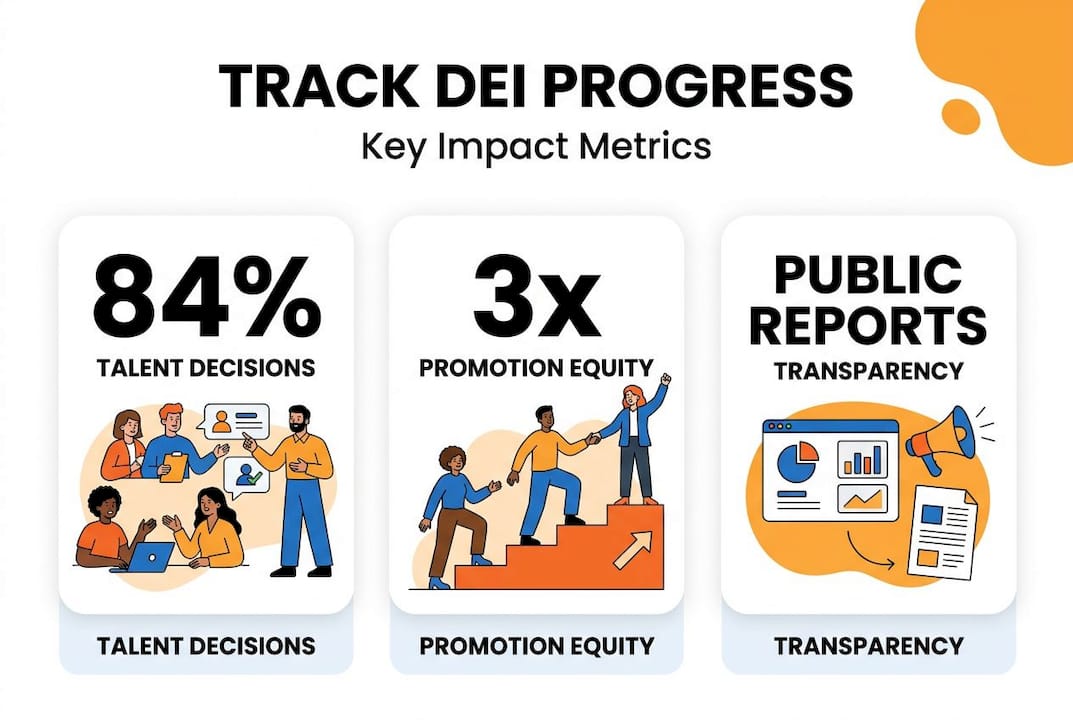
Building a measurement backbone requires both qualitative and quantitative input. Here’s how to structure a practical accountability cycle:
- Run quarterly pulse surveys with identity-segmented breakdowns and share findings with all leaders.
- Set annual DEI targets at the business unit level, reviewed in the same meeting as financial performance.
- Track LGBTQ+ representation across hiring funnels, promotions, and exits separately to identify where the pipeline breaks down.
- Create a confidential incident reporting system that is reviewed by a senior leader, not just HR.
- Publish an annual DEI report externally, which creates accountability to employees, investors, and the wider LGBTQ+ community.
A note on self-assessment: leaders who only measure what they feel comfortable seeing will see what they want to see. External benchmarking and third-party audits add credibility and surface blind spots that internal teams miss. Organizations that take measuring support for inclusion seriously tend to find gaps they didn’t know existed, and close them faster because of that clarity.
Public reporting is especially powerful. When an organization commits to transparency about its DEI progress, it sends an unambiguous signal to LGBTQ+ employees and candidates that the commitment is genuine. It also raises the stakes for leadership, which is exactly the kind of accountability pressure that drives real behavior change.
What most articles miss about leadership’s role in DEI
Here’s the uncomfortable truth most leadership and DEI articles skip: the biggest barrier to LGBTQ+ inclusion isn’t hostile employees. It’s well-intentioned leaders who believe their organizations are more inclusive than they actually are.
Leaders overestimate their own inclusive behaviors. They remember the times they spoke up. They forget the meetings where they didn’t challenge a biased comment. They focus on what they’ve built. They miss what still needs to be redesigned. This gap between intent and reality is where LGBTQ+ employees experience the most harm. Not from overt discrimination, though that still exists. From the quiet accumulation of moments when leadership didn’t show up.
Systemic bias doesn’t yield to periodic tactics. A twice-yearly training will not undo the daily micro-decisions that favor the dominant group. What it requires is constant leadership vigilance: a standing commitment to noticing, naming, and changing patterns. This is why we believe the best DEI leaders are the ones who are perpetually uncomfortable with the current state, not the ones celebrating progress.
At myGwork, we’ve seen firsthand through the stories of leaders championing LGBTQ+ talent that authentic culture change involves genuine personal risk. Leaders who model their own learning, publicly acknowledge mistakes, and open direct feedback channels with LGBTQ+ colleagues create organizations where inclusion compounds over time. Those who delegate it or treat it as a reputational exercise create organizations where LGBTQ+ talent quietly exits.
The most underrated leadership skill in DEI is not empathy or allyship. It’s accountability tolerance. The ability to sit with difficult feedback, own it, and act without defensiveness is what separates leaders who move the needle from those who manage impressions. LGBTQ+ professionals know the difference. And they vote with their feet.
Empower your DEI journey with support
Leading with genuine inclusion takes more than good intentions. It takes the right networks, benchmarks, and tools to turn commitment into measurable impact for LGBTQ+ professionals at every level of your organization.
myGwork connects LGBTQ+ professionals, allies, and inclusive organizations in a global network built specifically for this work. Whether you’re looking to attract LGBTQ+ talent, strengthen your employer brand, access DEI resources, or connect with peers navigating the same leadership challenges, the myGwork LGBTQ+ talent network is built to support every step. From job listings at verified inclusive employers to mentorship programs, networking events, and community-driven insights, myGwork gives your DEI leadership strategy the infrastructure it deserves.
Frequently asked questions
What are the most impactful leadership actions for LGBTQ+ inclusion?
Embedding inclusion into hiring, performance, and promotion systems while holding executives accountable for inclusive behaviors are the highest-impact actions. Visible advocacy from senior leaders also builds the trust LGBTQ+ employees need to bring their full selves to work.
How can leaders measure DEI progress effectively?
Track LGBTQ+ retention, promotion equity, and engagement survey results segmented by identity, and share findings publicly to build trust. Leaders who align DEI with measurable outcomes close gaps faster because they can actually see where the breakdown occurs.
Why do most DEI initiatives fail to achieve lasting change?
They fail because they rely on episodic programs rather than continuous accountability embedded in how leaders operate every day. Without ownership at every management level, DEI stays a People team initiative rather than an organizational culture.
How important is visible LGBTQ+ leadership in DEI?
Extremely important. Visible LGBTQ+ leaders signal safety to prospective and current employees, improve trust across the organization, and directly influence talent decisions. When LGBTQ+ professionals see themselves represented at senior levels, they’re more likely to join, stay, and grow within that organization.