
How to Switch Industries as an LGBTQ+ Professional
July 13, 2026Switching industries as an LGBTQ+ professional means more than updating your resume. It requires auditing transferable skills, test-driving the target field, and deciding how and when to disclose your identity to assess cultural fit. The formal term for this process is a career pivot, and LGBTQ+ professionals face a distinct version of it: one where workplace safety, visible inclusive leadership, and authentic self-expression factor into every decision. This guide gives you a structured, practical path through each stage of that pivot.

How to switch industries as an LGBTQ+ professional: start with a skills audit
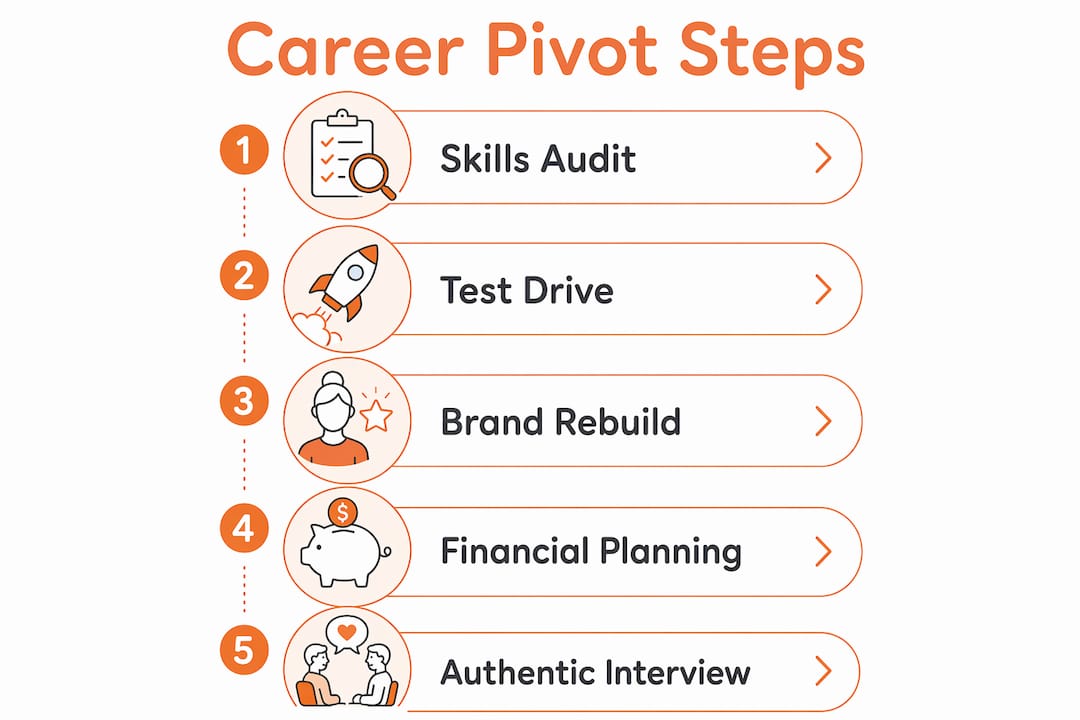
The first step in any career pivot is understanding exactly what you bring to a new field. A two-week task audit is the most reliable method. For 14 days, log every task you complete at work, how long it takes, and whether it energizes or drains you. The pattern that emerges tells you two things: what you are genuinely good at, and whether your dissatisfaction comes from the wrong industry or simply from bad management.
That distinction matters enormously. Many professionals plan a full industry switch when a role change within their current field would solve the problem. A task audit forces that clarity before you commit to anything.
Once you have your task list, separate the skill from the context. “Managed a $2M product launch” is a context-specific bullet. “Led cross-functional teams to deliver a complex project on time and on budget” is a transferable skill. Reframing every bullet this way reveals how much of your experience crosses industry lines.
- Log every task for 14 days. Note the skill category, not just the job title.
- Identify your top 10 transferable skills. Focus on outcomes, not tools.
- Map those skills to your target industry. Aim to match 60–65% of the job requirements before applying.
- Flag gaps. Decide whether a short certification or a side project closes them faster than a full degree.
Professionals who meet 65–80% of job requirements before applying have the strongest offer rates. Below 60% readiness, gaining experience or a targeted credential first is the smarter move.
Pro Tip: When rewriting your experience, ask yourself: “Would this bullet make sense on a job posting in my target industry?” If yes, keep it. If not, reframe it until it does.
How do you test-drive a new industry before committing?
Informational interviews are the single most underused tool in a career pivot. Aim for 5–8 conversations with people who currently work in your target field. These are not job interviews. They are intelligence-gathering sessions that give you a realistic preview of day-to-day work, unwritten norms, and the skills that actually matter versus the ones that appear in job postings.
For LGBTQ+ professionals, informational interviews serve a second purpose. They let you read the room on culture before you are formally in a hiring process. Pay attention to how your contact talks about their team, whether they mention ERGs (Employee Resource Groups), and how they respond if you ask about inclusion initiatives.
Beyond conversations, you need hands-on evidence. Career pivots that succeed without formal qualifications rely on clear proof assets: freelance projects, volunteer work, or contract assignments that demonstrate real output in the new field. Aim for 20 or more hours of documented work you can show in an interview.
- Schedule 5–8 informational interviews. Use Mygwork’s network to find LGBTQ+ professionals already working in your target industry.
- Complete at least one freelance or contract project. Even unpaid work for a nonprofit counts if the output is real.
- Document everything. Screenshots, case studies, and outcome metrics become your portfolio.
- Ask each contact for one more referral. This compounds your network without cold outreach.
Pro Tip: When you land an interview for a full-time role, reference your test-drive work directly. “I spent three months freelancing in this space and here is what I built” is more persuasive than any credential.
When and how should you disclose your LGBTQ+ identity during a job search?
Disclosure timing is one of the most personal decisions in an LGBTQ+ career transition. There is no single right answer, but there is a clear framework. Coming out during a job search can filter out unsupportive employers early and connect you with allies, but it also carries the risk of bias in hiring decisions. The key is choosing the timing that gives you the most information with the least exposure.
The four main timing options are: on your resume, during the interview, after a verbal offer, or not at all. Each has trade-offs.
- Resume disclosure (ERG leadership, LGBTQ+ advocacy roles): signals values early and filters culture fast, but exposes you to bias before any human connection is made.
- Interview disclosure: gives you a chance to read the interviewer’s reaction in real time and ask pointed follow-up questions.
- Post-offer disclosure: protects you from early-stage bias and lets you negotiate from a position of strength before revealing personal information.
- No disclosure: a valid choice in any context, particularly in regions or industries where legal protections are limited.
Subtle signaling is a middle path that many LGBTQ+ professionals use effectively. Mentioning ERG involvement, asking about inclusive employer practices, or referencing diversity-focused professional communities signals your values without a direct statement.
“Disclosure is not a one-time event. It is a recurring, non-linear experience. Setting non-negotiable standards for employer safety before interviews, rather than during them, puts you in control of the process and protects your long-term satisfaction.” — Career Directors International
Asking specific questions about transgender or nonbinary healthcare benefits, parental leave equity, and ERG funding reveals far more about a company’s real culture than any public diversity statement. These questions also signal to inclusive employers that you know what genuine inclusion looks like.
How to rebuild your professional brand and financial runway
Your resume and LinkedIn profile need to work for a new audience. Hiring managers in your target industry do not know your previous field’s jargon, so every bullet must lead with an outcome they recognize. Replace role-specific language with results: revenue generated, costs reduced, teams led, problems solved.

Your LinkedIn headline should not describe what you did. It should describe what you do and where you are headed. A headline like “Marketing Manager at TechCorp” becomes “Brand Strategist | Helping mission-driven organizations grow their audience.” The About section should tell a clear pivot story: where you came from, what you bring, and why this new direction is a deliberate choice, not a retreat.
Financial preparation is the part most professionals underestimate. Successful career transitions typically take 6–18 months from decision to first paycheck in the new field. Full pivots often come with a 15–25% pay cut in year one. Adjacent pivots, where you keep your core skills and change the industry or vice versa, usually maintain pay levels. Adjacency strategies protect seniority and reduce financial risk significantly.
Build 6–12 months of financial runway before resigning. That buffer removes the desperation that leads to accepting the wrong offer. For LGBTQ+ professionals, this runway also funds the time needed to vet employers properly, not just accept the first inclusive-sounding job description you find.
Pro Tip: When negotiating, ask about the full benefits package, not just base salary. Gender-affirming healthcare coverage, domestic partner benefits, and inclusive parental leave policies are part of your total compensation. Use salary negotiation resources built for LGBTQ+ professionals to benchmark what equitable pay looks like in your target field.
How do you apply and interview authentically in a new industry?
Your cover letter needs one clear pivot narrative. Hiring managers in a new field will ask why you are switching. Answer it before they ask. A strong pivot narrative has three parts: what you did, what connects that experience to this role, and why this specific company and industry. Keep it to two sentences in the cover letter and two minutes in the interview.
Prepare answers to these questions before every interview:
- “Why are you leaving your current industry?” (Answer: deliberate choice, not escape.)
- “You don’t have direct experience in X. How will you get up to speed?” (Answer: your test-drive work and specific examples.)
- “Where do you see yourself in three years?” (Answer: rooted in the new field, not hedging back to the old one.)
Visible LGBTQ+ leaders in an organization significantly influence job satisfaction and retention. Research shows that 84% of LGBTQ+ graduates say diverse leadership impacts their job decisions. That statistic means you should look beyond the job description and research who actually leads the company before accepting any offer.
Ask your Mygwork network for references from people who have worked at your target companies. Insider accounts of day-to-day culture are more reliable than Glassdoor ratings or corporate DEI reports. A company that lists LGBTQ+ inclusion in its values but has no visible LGBTQ+ leaders above the manager level is telling you something important.
Key Takeaways
Switching industries as an LGBTQ+ professional succeeds when you combine a clear skills audit, hands-on evidence in the new field, and deliberate vetting of employer culture before you accept any offer.
What I have learned about LGBTQ+ career pivots that most guides miss
Most career change advice treats disclosure as a side note. For LGBTQ+ professionals, it is central to the entire process. The question is not just “Can I do this job?” It is “Can I do this job as myself, without hiding?”
The goal is not a perfect workplace. The goal is a workplace where you can lead with integrity, where inclusive leadership is visible and not just decorative. Token DEI language is easy to spot once you know what to look for: a company with a rainbow logo in june but no LGBTQ+ executives, no ERG budget, and no specific benefits for transgender employees is performing inclusion, not practicing it.
The professionals I have seen navigate career pivots most successfully treat their LGBTQ+ identity as a professional asset, not a liability to manage. The community connections, the experience of building trust across difference, and the resilience that comes from navigating complex social environments are genuinely transferable skills. They belong on your resume and in your interviews, framed as leadership experience.
The role of visibility in LGBTQ+ careers is not just about representation. It is about psychological safety. When you can see someone like you in a leadership role at a company, you have real evidence that the culture supports your growth. That evidence is worth more than any diversity statement.
myGwork: your network for LGBTQ+ inclusive career transitions
myGwork connects LGBTQ+ professionals with employers who have demonstrated real commitment to inclusion, not just stated it. Whether you are at the skills audit stage or ready to apply, the platform gives you access to job listings at verified inclusive organizations, a professional network of LGBTQ+ peers across industries, and mentorship from professionals who have made the same pivot you are planning.
The informational interviews, insider culture references, and community support that make career transitions succeed are all available through myGwork's platform. You do not have to vet every employer from scratch. The network has already done significant groundwork. Connect with LGBTQ+ professionals in your target industry, access resources built for your specific career stage, and find employers who are actively recruiting for inclusion.
FAQ
How long does an LGBTQ+ industry switch typically take?
Career transitions typically take 6–18 months from decision to first paycheck in the new field. Adjacent pivots that preserve core skills tend to close faster, often within 6–12 months.
Should I disclose my LGBTQ+ identity on my resume?
Disclosure on a resume is a personal choice with real trade-offs. It filters unsupportive employers early but exposes you to potential bias before any human connection is made. Subtle signaling through ERG involvement or targeted interview questions is a lower-risk alternative.
Will I take a pay cut when switching industries?
Full pivots into a new industry with new skills often come with a 15–25% pay cut in year one. Adjacent pivots that keep your core skills or industry familiarity usually maintain your current pay level.
How do I vet whether a company is truly LGBTQ+ inclusive?
Ask specific questions about transgender healthcare coverage, ERG funding, and parental leave equity. 84% of LGBTQ+ graduates say visible diverse leadership influences their job decisions, so look for LGBTQ+ representation above the manager level before accepting any offer.
What is the fastest way to build credibility in a new industry?
Complete 20 or more hours of freelance, contract, or volunteer work in the target field before applying for full-time roles. Documented proof assets from real projects are more persuasive to hiring managers than credentials alone.