
The Role of Visibility in LGBTQ+ Careers: 2026 Guide
June 23, 2026Visibility in LGBTQ+ careers is defined as the deliberate act of making both your identity and your professional contributions legible to colleagues, leaders, and organizations. The role of visibility in LGBTQ+ careers goes beyond personal authenticity. It is a career mechanism that converts real competence into recognized influence, shapes hiring decisions, and determines whether LGBTQ+ professionals advance or stall. Research from MIT Sloan Management Review, the HRC Foundation, and NHS Employers confirms that visibility drives engagement, reduces turnover, and builds the kind of organizational trust that fuels long-term career growth.

How does visibility shape LGBTQ+ career advancement?
Visibility is a legitimacy mechanism. According to MIT Sloan Management Review, if people cannot see your value, they assume it does not exist. That assumption directly blocks promotions, sponsorships, and leadership opportunities.

The critical distinction here is between two types of visibility. The first is contribution visibility: making your work, ideas, and impact clear to decision-makers. The second is identity disclosure: choosing to be openly LGBTQ+ at work. These are separate decisions with separate risk profiles. MIT Sloan research confirms that planned visibility approaches separate identity disclosure from contribution visibility, allowing LGBTQ+ professionals to advance safely even in environments where full disclosure carries risk.
Under-visibility is a real career threat. LGBTQ+ professionals who stay quiet about their contributions, avoid speaking up in meetings, or skip networking opportunities often find their performance overlooked at review time. This pattern appears across professional services and healthcare, where visibility in high-stakes settings directly correlates with who gets tapped for leadership roles.
Digital presence amplifies this effect. A clear LinkedIn profile, published work, and active participation in industry forums all make contributions legible beyond your immediate team. These tools work for any professional, but they carry extra weight for LGBTQ+ professionals navigating workplaces where informal sponsorship networks may not include them by default.
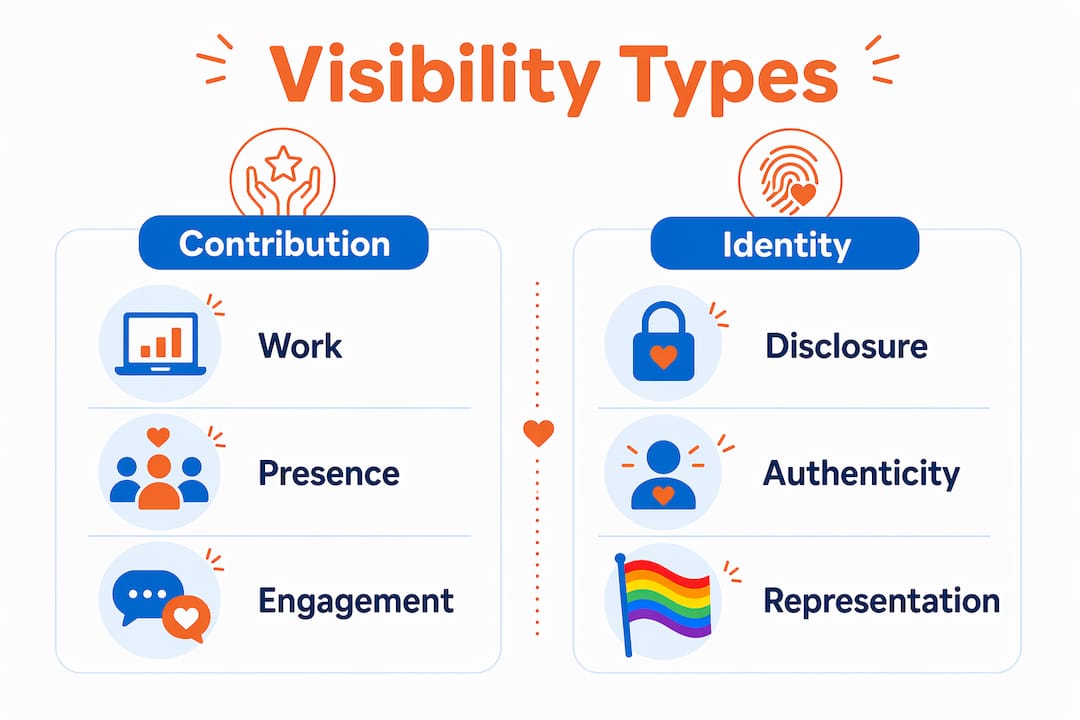
Pro Tip: Separate your visibility strategy into two tracks: one for making your work known (contribution visibility) and one for identity disclosure. You can advance the first track aggressively while taking a measured approach to the second.
Key contribution visibility tactics include:
- Speaking up in cross-functional meetings and following up in writing
- Requesting credit attribution on shared projects and presentations
- Building relationships with sponsors, not just mentors, who will advocate for you in rooms you are not in
- Using platforms like Mygwork to connect with LGBTQ±friendly employers who already recognize diverse talent
What organizational policies shape LGBTQ+ workplace inclusion?
Employer behavior is the single biggest variable in whether LGBTQ+ visibility helps or harms a professional’s career. The HRC Foundation’s 2026 research shows that organizations cutting DEI efforts see LGBTQ+ workers experiencing bias at more than twice the rate (54.2% vs. 24.9%) compared to those maintaining inclusion commitments. That gap is not a rounding error. It represents a structural difference in how safe it is to be visible at work.
The same HRC Foundation data shows a 65% drop in Fortune 500 Corporate Equality Index submissions between 2025 and 2026. That decline signals that many large employers are quietly retreating from public inclusion commitments. For LGBTQ+ professionals, this retreat makes reading organizational signals before disclosing identity more important than ever.
NHS Employers research on lesbian visibility in NHS leadership shows that intentional visibility by LGBTQ+ leaders encourages staff to feel safe and builds a pipeline to senior roles. Leaders who are openly LGBTQ+ do not just represent themselves. They signal to every junior LGBTQ+ employee that advancement is possible. That signal affects recruitment, retention, and day-to-day engagement.
Organizations that want to support LGBTQ+ visibility need to do more than write policies. They need to communicate inclusion repeatedly and through multiple channels. A single Pride month statement does not create psychological safety. Consistent messaging in hiring materials, onboarding, performance reviews, and leadership communications does. Learning how to spot truly inclusive workplaces is a skill LGBTQ+ professionals need to develop before accepting any new role.
How should LGBTQ+ professionals balance visibility risks and benefits?
Disclosure is a structured decision, not a single moment. A systematic review published in BMJ Open found that LGBTQ+ disclosure involves a risk-benefit dilemma shaped by level, scope, method, and timing. When done in a safe environment, disclosure improves job satisfaction and reduces turnover. When done without adequate protections, it increases stress and can damage career trajectories.
A practical framework for managing this decision involves four variables:
- Level: Are you disclosing to a peer, a manager, or the entire organization? Start with the level that carries the least risk and build from there.
- Scope: Are you sharing with one trusted colleague or making a broad announcement? Selective disclosure to allies first gives you feedback on the environment before wider visibility.
- Method: A one-on-one conversation carries different weight than a public post or an ERG membership. Choose the method that matches your current level of psychological safety.
- Timing: Disclosure during a performance review cycle or organizational restructure adds unnecessary risk. Choose a period of relative stability when your contributions are already visible and valued.
Disclosure-related stress compounds without sufficient protections. Mapping disclosure pathways to your organization’s anti-discrimination policies is the most direct way to reduce that stress. If your employer has no formal protections, that is critical information before you decide to be visible.
Pro Tip: Before disclosing identity at work, review your employer’s anti-discrimination policy and identify at least one senior ally who will advocate for you if needed. Preparation reduces risk without requiring you to stay invisible.
Mental health is directly tied to visibility decisions. Research on LGBTQ+ mental health in professional settings confirms that unsupported visibility increases anxiety and reduces performance. Building a support network before increasing visibility, whether through an ERG, a mentor, or a platform like Mygwork, creates the safety net that makes disclosure sustainable.
Real-world examples of visibility changing careers and workplace culture
The NHS provides the clearest documented case study of LGBTQ+ visibility at scale. NHS Employers research shows that visible LGBTQ+ leadership builds trust internally and externally, improving recruitment, retention, and patient care outcomes. Openly lesbian leaders in NHS trusts report that their visibility encourages authentic thriving among staff and signals safety to both employees and patients.
The effect is not limited to healthcare. Across sectors, visible LGBTQ+ leaders change the calculus for junior professionals deciding whether to disclose. Mygwork data shows that 84% of LGBTQ+ graduates say visible LGBTQ+ leaders influence their job choices. That statistic reframes visibility as a talent acquisition tool, not just a personal decision.
Qualitative research from Springer on career adaptation in LGBT+ individuals identifies belonging and acceptance as the primary positive outcomes of coming out at work in inclusive environments. Adverse effects, including harassment and exclusion, cluster in environments without formal protections or visible leadership support.
Key patterns from real-world visibility outcomes:
- LGBTQ+ professionals in organizations with visible leaders report higher engagement and stronger sense of belonging
- Retention improves when LGBTQ+ employees see a clear path to leadership that includes people like them
- Visible LGBTQ+ leaders attract LGBTQ+ talent, creating a self-reinforcing cycle of inclusion
- Bias training paired with visible leadership produces better outcomes than either approach alone, as workplace inclusion research confirms
“When I saw an openly gay partner at my firm, I stopped planning my exit. I started planning my promotion.” — LGBTQ+ professional, professional services sector
The lesson from these examples is consistent. Visibility is not just a personal act of courage. It is an organizational asset that improves culture, retention, and performance when supported by the right structures.
Key Takeaways
Visibility in LGBTQ+ careers is the most direct path from competence to recognized leadership, but it requires both individual strategy and organizational support to work.
Visibility is a strategy, not just a statement
The framing I see most often gets this backwards. People treat LGBTQ+ visibility as an act of personal bravery, full stop. That framing puts all the weight on the individual and none on the organization. After years of watching LGBTQ+ professionals navigate this, I am convinced the more useful frame is strategic communication.
Leaders commonly overestimate their own visibility. NHS Employers research makes this explicit: deliberate communication through meetings, written channels, and repeated presence in decision forums is what creates real organizational visibility. Assuming people see your value because you are doing good work is a career mistake anyone can make. For LGBTQ+ professionals, the cost of that assumption is higher.
What I find genuinely encouraging in 2026 research is the growing recognition that organizational transparency reduces individual burden. When employers make inclusion legible through policy, leadership, and communication, LGBTQ+ professionals do not have to carry the full weight of visibility alone. That shift, from individual act to shared responsibility, is where real progress lives. Platforms like Mygwork are part of that infrastructure, connecting professionals to employers who have already done the structural work.
The practical takeaway is this: build your contribution visibility aggressively, map your disclosure decisions to your organization’s actual protections, and seek out environments where LGBTQ+ leaders are already visible. You should not have to be the first.
myGwork connects LGBTQ+ professionals to visibility-ready employers
Building career visibility is significantly easier when your employer already understands its value. myGwork is a global professional networking platform built specifically for LGBTQ+ professionals and allies, connecting members to inclusive employers, job listings, mentoring programs, and community events.
myGwork's network includes organizations that publicly commit to LGBTQ+ inclusion, giving professionals the organizational foundation that makes visibility safe and productive. Whether you are searching for LGBTQ±inclusive job opportunities, building your professional network, or looking for mentors who understand your experience, myGwork provides the infrastructure. Employers on the platform actively signal their inclusion commitments, so you can evaluate cultural fit before you ever walk through the door. Explore employer branding for LGBTQ+ inclusion to understand what genuine commitment looks like.
FAQ
What is the role of visibility in LGBTQ+ careers?
Visibility in LGBTQ+ careers makes both identity and professional contributions legible to colleagues and decision-makers, which drives career advancement, engagement, and retention. MIT Sloan Management Review identifies visibility as a core legitimacy mechanism that converts competence into recognized leadership.
Does being visible at work help or hurt LGBTQ+ professionals?
In inclusive environments, visibility improves job satisfaction and reduces turnover. BMJ Open research confirms that disclosure outcomes depend heavily on organizational protections, timing, and the scope of disclosure.
How do organizational DEI policies affect LGBTQ+ visibility?
HRC Foundation 2026 research shows that LGBTQ+ workers in organizations cutting DEI experience bias at more than twice the rate of those in companies maintaining inclusion commitments. Employer policy directly shapes how safe visibility is.
Can LGBTQ+ professionals be visible without disclosing their identity?
Yes. MIT Sloan research confirms that contribution visibility and identity disclosure are separate strategies. LGBTQ+ professionals can make their work and impact highly visible while managing identity disclosure on their own timeline and terms.
How does LGBTQ+ leadership visibility affect hiring?
Mygwork data shows that 84% of LGBTQ+ graduates say visible LGBTQ+ leaders influence their job choices. Visible leadership functions as a talent signal, attracting LGBTQ+ professionals to organizations where they can see a realistic path to advancement.