
Why invest in D&I training: improve inclusion and drive results
May 15, 2026Diversity and inclusion training gets a bad reputation in some boardrooms, dismissed as a checkbox exercise that costs time and budget while delivering little measurable return. That perception is expensive. Companies with top-quartile gender diversity on executive teams are 39% more likely to outperform on profitability, and the organizations that treat D&I training as a strategic tool rather than a compliance ritual are the ones pulling ahead. This guide unpacks the real business case, the cultural transformation potential, the pitfalls to avoid, and the science-backed practices that actually move the needle.

The real business case for D&I training
To understand why D&I training deserves serious investment, let’s examine its tangible business outcomes.
Most HR managers have sat through a leadership meeting where someone asked whether D&I spending “actually works.” The frustrating reality is that the data has been clear for years, and it keeps getting stronger. The conversation should have moved from “does it matter” to “how do we do it well.”
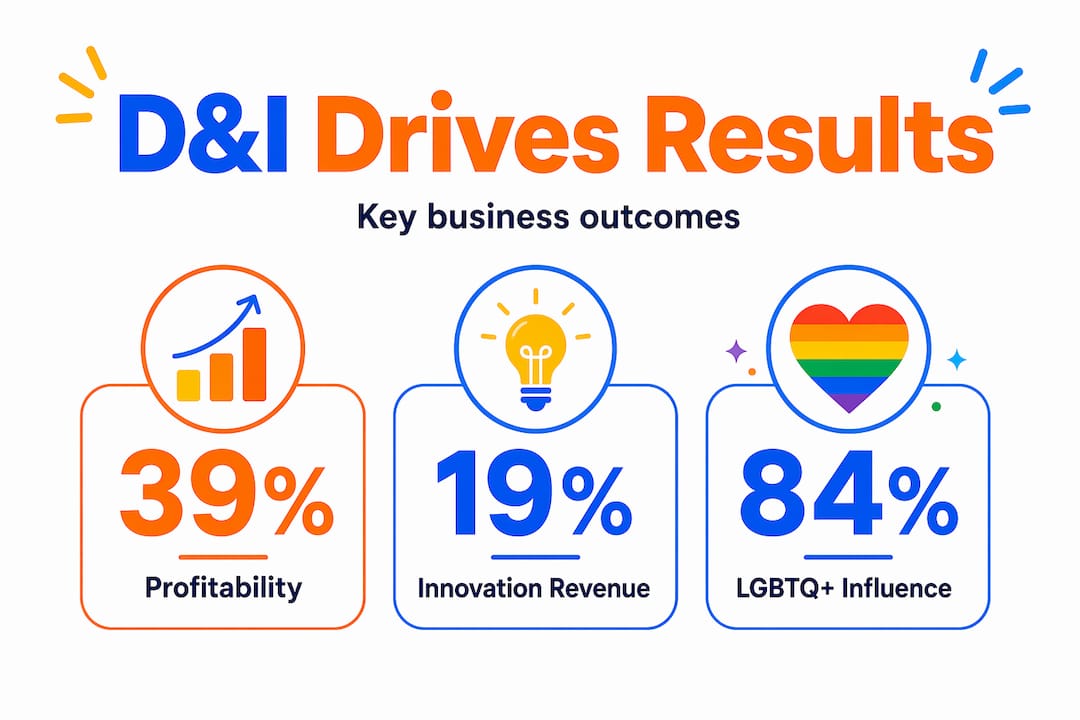
Start with the numbers. Top-quartile gender diversity on executive teams correlates with a 39% higher likelihood of outperforming on profitability. That is not a soft social metric. That is a figure your CFO can sit with. The mechanism is straightforward: diverse leadership teams bring wider perspectives to problem-solving, risk assessment, and market strategy, which produces better decisions over time.
Innovation follows the same pattern. Firms with above-average diversity on management teams report 19% higher revenue from innovation. When your teams include people with different backgrounds, identities, and lived experiences, they generate a wider range of ideas. Groupthink, one of the most quietly destructive forces in any organization, shrinks.
Talent acquisition is another angle that matters enormously right now. Candidates, especially younger professionals, actively research a company’s inclusion record before accepting an offer. Investing in LGBTQ+ workplace bias training is not just an internal culture decision. It signals to the market that your organization is somewhere people can thrive, which widens your hiring funnel considerably.
Your clients and customers are also paying attention. Procurement teams at major corporations now routinely evaluate supplier diversity. Market segments that were once overlooked, including the LGBTQ+ community, represent significant purchasing power. Organizations that authentically reflect the diversity of their customer base build deeper trust and loyalty. Pairing D&I training with smart diversity hiring tools creates a pipeline that sustains those gains over time.
“Diversity is not just the right thing to do. It is a core driver of how modern organizations compete, innovate, and grow.”
The business case is not a talking point. It is a measurable competitive advantage.
How D&I training transforms workplace culture
Besides financial gains, D&I training can fundamentally reshape daily work experiences and interactions.

Numbers tell part of the story. But the transformation that happens inside teams when D&I training is done well is harder to quantify and arguably more important. Culture is the operating system of your organization. Everything else runs on top of it.
Research confirms the behavior change is real. Diversity training positively impacts workplace behavior, shifting how colleagues interact, how managers make decisions, and how teams handle conflict. This goes well beyond awareness. Effective training changes the default response patterns people bring to everyday situations, from how feedback is delivered to who gets invited into important conversations.
The link between inclusion and performance is also direct. Diversity-oriented HR practices enhance employee adaptive performance through perceived inclusion. In plain terms: when employees feel genuinely included, they become more flexible, more creative, and more effective in responding to change. In a business environment where adaptability is a survival skill, that outcome has real operational value.
Healthcare offers one of the clearest demonstrations of what sustained D&I programs can achieve. EDI programs in healthcare have been shown to increase workforce diversity, with meta-analysis finding increased minority representation in residencies at an odds ratio of 1.73. If a field as structurally entrenched as medicine can shift its demographic composition through deliberate D&I efforts, the lesson for corporate organizations is that change is achievable when programs are sustained and well-designed.
Here is what effective culture transformation through D&I training looks like in practice:
- Psychological safety increases. Employees feel safe raising concerns, sharing ideas, and flagging problems without fear of retaliation.
- Decision-making improves. Diverse perspectives at the table catch blind spots before they become costly mistakes.
- Collaboration deepens. Teams that understand and respect difference work through friction more effectively.
- Leadership develops more equitably. Talented people from all backgrounds get access to the visibility and support they need to advance.
Embedding inclusive leadership frameworks into your training curriculum is one of the highest-leverage actions you can take. When leaders model the behaviors they expect, the rest of the organization follows. Training that stops at the individual contributor level and never reaches leadership is training with a ceiling.
Pro Tip: Pair your D&I training rollout with practical guidance on supporting neurodiverse employees as part of a broader inclusion curriculum. Neurodiversity is one of the most overlooked dimensions of workplace inclusion, and teams that address it explicitly tend to build cultures that work better for everyone.
Common pitfalls: When D&I training backfires
However, not all D&I training yields positive results. In some cases, approaches can actually backfire.
This is the part most vendors and consultants underplay, but it is critical for HR managers to understand before designing a program. Poor implementation does not just fail to help. It can actively make things worse.
The most well-documented risk involves mandatory training. Mandatory diversity training often backfires, increasing bias, resistance, and backlash, especially among certain groups. The psychological mechanism here is called reactance: when people feel their autonomy is being taken away, they often double down on the attitudes the training was designed to address. A room full of reluctant attendees can leave with stronger biases than they walked in with.
The “one-and-done” format is the second major trap. A two-hour session once a year accomplishes almost nothing. Behavioral change requires repetition, reinforcement, and connection to real workplace systems. Organizations that treat D&I training as an annual event rather than an ongoing culture effort are essentially spending money to feel like they did something without moving any meaningful needle.
Comparison of training approaches:
Here are the four most common failure patterns D&I training falls into:
- No leadership buy-in. When senior leaders do not visibly participate and champion D&I, employees read the signal clearly: this is not really important.
- Unclear goals. Training designed around vague objectives like “raise awareness” cannot be measured and rarely changes anything concrete.
- No systemic connection. Training that exists in isolation from hiring practices, promotion criteria, and performance management hits a wall.
- No accountability mechanisms. Without accountability, even well-intentioned training fades within weeks.
Research supports tailored D&I training solutions as a more effective path forward. A program designed around your organization’s specific dynamics, demographics, and challenges will always outperform a generic off-the-shelf module. Context matters enormously in behavior change work.
Looking at a diversity recognition case study from organizations that have earned top rankings reveals a common thread: they did not achieve excellence through training programs alone. They embedded inclusion into every people process, with training serving as one reinforcing component among many.
Pro Tip: Before launching any training initiative, conduct a brief internal audit. Survey employees anonymously about their current experience of inclusion. Use that data to set specific, measurable goals for your training program. You cannot improve what you have not defined.
What does effective D&I training look like?
To ensure your D&I investment delivers, here is what research shows works best.
The good news is that the research on effective D&I training is increasingly specific. You do not have to guess. There is a growing body of evidence pointing clearly toward the design features that produce real, lasting change.
Effective diversity training requires voluntary participation, long-term sustained efforts, structural changes, and pairing with accountability mechanisms. Each of those elements deserves attention individually.
Voluntary participation changes the psychological contract entirely. When employees choose to engage, they arrive more open, more curious, and more willing to do the uncomfortable work of examining their own assumptions.
Long-term, sustained efforts recognize how behavior change actually works. A single session plants a seed. Ongoing reinforcement through workshops, coaching, peer discussion groups, and embedded practices grows it into genuine culture change.
Structural changes are what separate transformational programs from cosmetic ones. Training must be connected to who gets hired, who gets promoted, how performance is evaluated, and how complaints are handled. Without that connection, training is theater.
Accountability mechanisms close the loop. When managers know their inclusion behaviors will be assessed and that those assessments carry real weight, they take the training seriously and apply it.
Multi-method delivery matters more than most organizations realize. A combination of facilitated workshops, online modules, one-on-one coaching, mentoring programs, and community discussion creates reinforcement from multiple angles. SHRM’s research on inclusion and performance consistently shows that organizations using multi-layered approaches outperform those relying on single-format training.
Behavioral focus is where many programs still fall short. Training that stops at “here is what bias is” without moving to “here is what to do differently when you notice bias in a meeting” leaves people informed but not equipped. The goal is changed behavior, not changed knowledge alone.
Consider the influence that visible, senior leadership has on outcomes. LGBTQ+ leadership influence is significant: 84% of LGBTQ+ graduates say diverse leaders influence their job choices. That finding underscores that inclusion signaling from the top of the organization is not just an internal culture matter. It shapes who chooses to work with you.
Finally, confronting workplace discrimination head-on, rather than dancing around it, is a marker of programs that actually move organizations forward. Avoiding discomfort in training guarantees discomfort later, usually at a much higher cost.
Pro Tip: Use Culture Amp’s framework for avoiding D&I pitfalls as a practical checklist when reviewing your current program design. It covers the most common design failures in an actionable format.
Our perspective: Why a strategic approach beats quick fixes
Here is an uncomfortable truth about the D&I training industry: a significant portion of what gets sold and purchased is designed more to protect organizations from liability than to actually change anything. That is not cynicism. It is a pattern visible in how many programs are structured, measured, and reported.
The organizations that see lasting results share one characteristic above all others: they treat D&I as an ongoing business function, not a calendar event. They budget for it the way they budget for leadership development or technical skills training, with regular cycles, iteration based on data, and clear accountability for outcomes.
The measurement question is where strategic programs separate from box-ticking ones. If your only metric is “number of employees trained,” you are measuring attendance, not impact. Track behavioral indicators, promotion equity, psychological safety scores, and retention data segmented by identity group. Those numbers tell you whether your investment is working.
We have seen firsthand through our work with organizations that the LGBTQ+ support program workflows that drive retention are rarely the flashiest initiatives. They are the consistent, embedded, well-resourced ones that employees experience as genuine rather than performative. A 35% retention improvement does not come from a single training day. It comes from a system.
The most resilient organizations we work with do not just train for inclusion. They build it into how they hire, promote, recognize, and lead. Training accelerates that process, but only when it is part of a deliberate, integrated strategy. The organizations that treat D&I as a strategic investment rather than a compliance cost do not just see better diversity metrics. They see better business outcomes, period.
Take the next step in building a more inclusive workplace
Ready to put these insights into action? Building genuine workplace inclusion requires more than a single training rollout. It demands continuous learning, community connection, and access to organizations and professionals who understand what meaningful inclusion looks like on the ground.
myGwork connects HR managers and diversity officers with a global network of LGBTQ+ professionals, inclusive employers, and expert resources designed to support every stage of your D&I journey. From job listings at organizations with proven inclusion records to educational resources, mentorship programs, and networking events, myGwork gives your organization the tools and community it needs to move from intention to impact. Whether you are just beginning to build your D&I strategy or looking to deepen a program that is already underway, explore what myGwork offers and connect with the people and organizations leading the way.
Frequently asked questions
How do you measure the success of D&I training?
Success is measured by tracking behavioral change, workplace diversity metrics, retention rates, and innovation outcomes over time. Organizations with above-average diversity in management report higher innovation revenue, making innovation metrics one of the most telling indicators of D&I program effectiveness.
Can D&I training reduce employee turnover?
Yes, well-designed D&I initiatives improve retention by building a sense of belonging and creating genuinely inclusive cultures. Research shows that diversity training positively impacts workplace behavior, which directly influences whether employees choose to stay.
What’s the risk of mandatory D&I training?
Mandatory training can trigger backlash and psychological reactance, particularly when it is not embedded in a broader culture shift. Mandatory diversity training often backfires, increasing bias and resistance rather than reducing them, especially among groups already skeptical of D&I efforts.
How often should D&I training be conducted?
Ongoing, multi-faceted programs consistently outperform single-session events in producing real behavioral change. Effective diversity training requires long-term sustained efforts and structural reinforcement rather than annual or one-time delivery.
Recommended
- Bias Training: Fostering LGBTQ+ Workplace Inclusion
- 84% say visible LGBTQ+ leaders influence their job choices – does your organization qualify?
- Top 6 Diversity Hiring Tools Comparison 2026 for Hiring Managers
- Top 5 ways we can support and empower neurodiverse people in the workplace and promote inclusivity