
How to Advance Your Career Faster Without Guesswork
August 25, 2026The fastest route to career advancement combines three things: one verifiable skill tied to a business problem, one visible contribution your manager can point to, and one active mentor or sponsor pushing your name into rooms you’re not in yet. Do all three at once, inside a 30/90/365 day frame, and most professionals see measurable movement within a single review cycle.
You don’t need a new degree to start. You need a plan you can execute this week.

Do these three things in the next 72 hours:
- Write down one specific skill gap standing between you and your next role, and book one hour of practice or study time for it.
- Identify a stalled or unowned project at work and volunteer for a visible piece of it before someone else claims it.
- Message one person, inside or outside your company, who has the job you want in three years and ask for 20 minutes of their time.
Pro Tip: At small and mid-sized employers, the fastest way to surface stretch work is to ask your manager directly, “What’s on your plate that nobody has time for?” Smaller teams almost always have unclaimed, visible work sitting in the gap between roles. Volunteering for it is often faster than waiting for a formal stretch assignment to get announced.
Key Takeaways
Career advancement accelerates fastest when a verifiable skill, a visible contribution, and an active mentor or sponsor are pursued simultaneously inside a 30/90/365 day plan.
What Does Career Advancement Actually Mean?
Career advancement is the combination of expanded title, scope, pay, and decision-making influence you gain over time. It’s not just a promotion. It’s the accumulation of responsibility, visibility, and trust that makes a promotion inevitable rather than requested.
That distinction matters because most people treat advancement as an event: the annual review, the reorg, the lucky opening. In practice, it’s a byproduct of continuously expanding your value to the organization. YourStory’s analysis of career growth strategies makes this point directly: growth comes from expanding your value and treating learning as a habit, not from collecting credentials or waiting for recognition.
Why prioritize it now, specifically? Three reasons converge:
- Pay compounds. Each step up typically resets your baseline for every future negotiation, so early moves matter disproportionately.
- Mobility increases. A track record of expanded scope makes you a stronger candidate everywhere, not just at your current employer.
- Resilience against disruption grows. As AI reshapes job categories, professionals with demonstrated adaptability and broader skill sets are harder to displace than those in narrow, static roles.
Here’s the part most people miss: the system is quietly stacked against passive waiting. Harvard Business School Online reports that roughly 85% of employees lack a mentor at their organization, even though 97% of professionals say mentorship matters for career growth. That gap is not an accident. It means the people actively building mentor relationships are competing against a talent pool where most peers aren’t even trying.
How Do I Set a Career Roadmap That Actually Works?
The answer starts with SMART goals layered on top of an honest strengths assessment. Pick the one goal where your existing strengths and the organization’s urgent needs overlap, because that intersection is where advancement happens fastest.
Google’s career development guidance frames this well: treating your career as a journey with a SMART framework converts vague ambition into a measurable roadmap. A vague goal like “get better at leadership” produces no action. A SMART version does:
- Specific: Lead a cross-functional project from kickoff to delivery.
- Measurable: Deliver it on time with a documented outcome (cost saved, revenue generated, process time reduced).
- Achievable: Choose a project already within reach, not a hypothetical dream role.
- Relevant: Tie it to a skill your manager has flagged as a gap for the next level.
- Time-bound: Complete it within 90 days, not “eventually.”
Before locking in that goal, run a quick self-assessment:
- What feedback have I received twice or more from different people? (That’s a real pattern, not a one-off.)
- Which of my skills are already stronger than my peers at the same level?
- What does the next role up actually require that I don’t yet have?
- Who already holds that role, and what did their path look like?
Once you know the gap, build the plan in three horizons. The 30-day window is for quick wins and information gathering: finish the self-assessment, have one conversation with your manager about growth expectations, and identify your first stretch opportunity. The 90-day window is for skill-building and visible delivery: complete a project with measurable impact and start one new relationship with a potential mentor or sponsor. The 365-day window is for positioning: you should have a documented track record, an internal or external network actively advocating for you, and a clear case for your next title. Glassdoor’s career-planning guidance recommends exactly this kind of agile roadmap, built around short and long-term milestones rather than a single fixed destination.
If you want a structured framework for building this out, Workit’s guide to career path planning offers a useful complementary approach to sequencing goals.
Which Skills Should You Prioritize First?
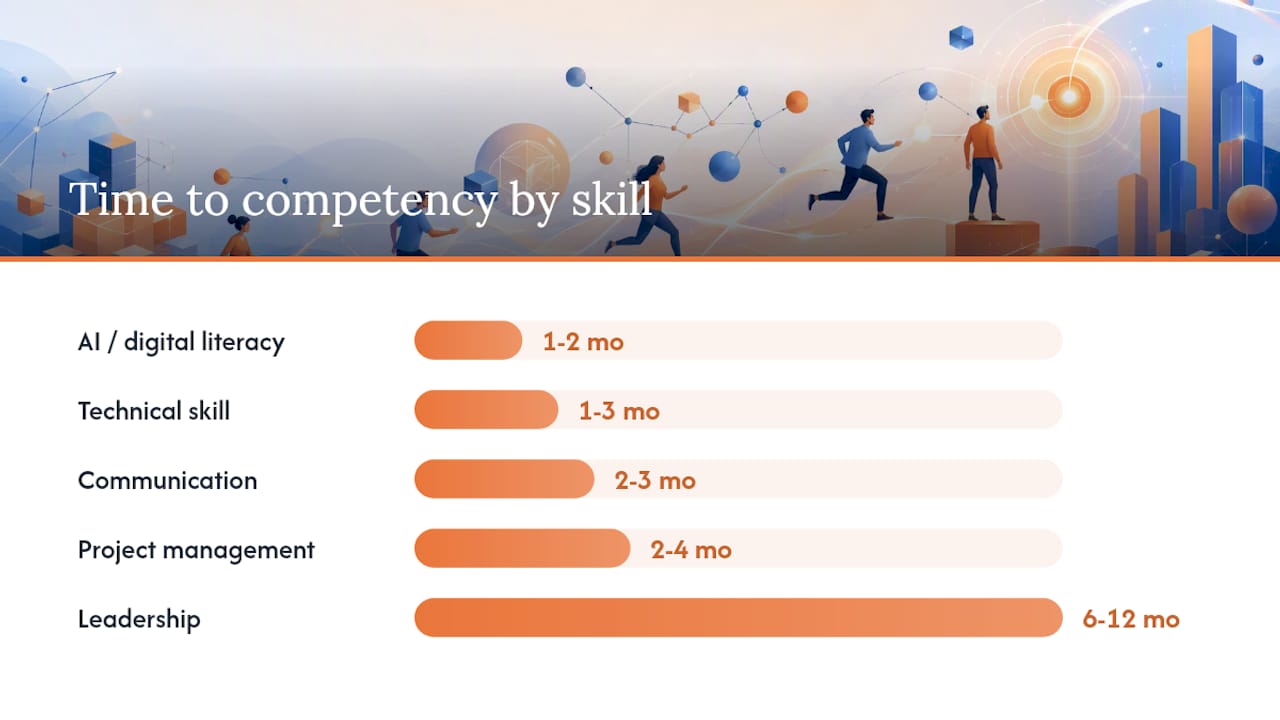
Prioritize one technical skill that solves an urgent, named problem at your organization, and one influence skill (communication or leadership) that lets you get others to act on your work. Skills nobody asked for don’t move careers. Skills tied to a business pain point do.
Here’s how to rank what to learn, in order of typical near-term payoff:
- A technical skill tied to a current bottleneck. Data analysis, a specific software platform, or a process your team struggles with. This is the fastest route to visible impact because the need already exists.
- AI and digital literacy. Companies are increasingly paying a premium for employees who can use AI tools competently within their function, according to Glassdoor’s 2026 career planning guidance. Ignoring this now is a bigger risk than most professionals realize.
- Project management fundamentals. Even informal PM skills (scoping, timelines, stakeholder updates) let you run bigger initiatives without a formal title change.
- Written and verbal communication. The ability to summarize complex work for executives is chronically underrated and rarely trained.
- Leadership and delegation. Necessary once you’re managing outcomes through other people rather than just your own output.
Demonstrate each one quickly through work products decision-makers can see: a before-and-after metric, a completed cross-functional project, a shipped process improvement, or a documented microcredential. 80,000 Hours notes that intensive, verifiable projects and bootcamps in the 3 to 12 month range tend to build more employer trust than passive coursework, because the output is concrete rather than theoretical.
What Fast-Track Tactics Actually Shorten the Timeline?

Stretch assignments, internal lateral moves, and visible cross-functional projects compress advancement timelines faster than waiting for annual review cycles. The common thread: each one creates a new data point about your capability that didn’t exist before.
Concrete tactics you can start this month:
- Ask for a stretch assignment explicitly. Don’t wait for it to be offered. HBS research notes that many managers won’t promote people who haven’t clearly communicated their goals, so the ask itself is often the missing step.
- Take a lateral move if it broadens your scope. A sideways move into a higher-visibility team can outpace a vertical promotion that leaves you stuck in a narrow lane.
- Volunteer for cross-functional work. Projects that touch multiple departments get noticed by more people who might later advocate for you.
- Run a “portfolio sprint.” Pick one unclaimed problem, solve it in two to four weeks, and document the before-and-after result.
60-day path: Weeks 1 to 2, identify and pitch a stretch assignment. Weeks 3 to 6, execute and document measurable progress. Weeks 7 to 8, present results to your manager and ask directly what’s needed for the next level.
180-day path: Month 1, complete a skills gap assessment and start one new mentor relationship. Months 2 to 4, deliver a cross-functional project with a documented outcome. Months 5 to 6, formalize the conversation about promotion or expanded scope using the evidence you’ve built.
Pro Tip: Smaller or fast-growing companies often promote faster and give broader feedback than large, brand-name employers, according to 80,000 Hours. If your current employer moves slowly, a lateral move to a smaller, high-performing team can compress your timeline by months, even without changing industries.
How Do You Find Mentors and Sponsors Who Actually Help?
Mentorship and sponsorship function as multipliers: the same work produces more visible results and more career capital when someone senior is actively advocating for you. Nearly nine out of ten professionals never build this relationship, which means the ones who do stand out disproportionately.
Here’s how to find them:
- Map your internal landscape first. Identify two or three people one or two levels above you whose path you’d want to follow, inside your own department or an adjacent one.
- Look outside your company too. Industry associations, alumni networks, and professional communities often produce mentors faster than internal politics allow.
- Distinguish mentors from sponsors. A mentor gives advice. A sponsor uses their influence to recommend you for opportunities when you’re not in the room. You want both, and they’re often different people.
- Make the ask small and specific. Nobody wants an open-ended “will you mentor me” request. Ask for one thing: 20 minutes, one piece of feedback, one introduction.
- Follow up with value, not just requests. Send a relevant article, an update on how their advice worked, or a small favor before asking for the next one.
A sample outreach message you can adapt for LinkedIn or email:
“Hi [Name], I’ve followed your work on [specific project or area] and admire how you approached [specific detail]. I’m working on building my skills in [area], and I’d value 20 minutes of your time to hear how you navigated a similar stage in your career. Would you be open to a short call in the next few weeks?”
Specificity is what gets replies. A generic “can I pick your brain” message gets ignored because it puts all the thinking work on the other person.
- Track who you’ve reached out to and follow up within two weeks if you hear nothing.
- Aim for one new mentor conversation per month, not a flood of cold outreach.
- Revisit relationships quarterly, even briefly, so you’re not only reaching out when you need something.
Professional communities built specifically around underrepresented groups tend to close this gap faster than generic networking, because the mentorship gap statistic from HBS hits marginalized professionals even harder than the overall workforce average. Networks like myGwork's sponsorship guidance for LGBTQ+ professionals exist precisely to close that specific gap.
How Do You Ask for a Promotion Without It Backfiring?
Document your wins, narrate them consistently, and then make a direct request. Skipping any one of the three steps is why qualified people get passed over: the work happened, but no one connected the dots publicly.
A short script for the actual conversation:
“Over the last [timeframe], I’ve delivered [specific project] which resulted in [measurable outcome]. I’ve also taken on [additional scope]. I’d like to talk about what the path to [target role/title] looks like from here, and what specific milestones you’d want to see from me.”
That last sentence matters. Asking “what would you need to see” turns a vague request into a concrete checklist your manager has to answer.
Keep a running log of your work using these fields, updated monthly rather than scrambled together right before a review:
For structuring this in a way that reads clearly to both managers and any automated review tools, Alloquy’s guide to documenting career achievements has useful formatting principles worth borrowing.
Avoid these common missteps:
- Waiting for the “perfect” moment instead of raising it in a normal 1:1.
- Framing the ask around tenure (“I’ve been here three years”) instead of impact.
- Letting big wins go unmentioned until review season, when memories have faded.
- Negotiating scope and pay in the same breath as a vague complaint about workload.
How Much Time and Money Should You Expect to Invest?
Advancement requires deliberate investment, and the size of that investment depends entirely on which path you choose. A lateral internal move might cost you nothing but time; a graduate degree might cost two years and a meaningful sum of money. Match the investment to the actual gap, not to whatever credential sounds impressive.
Cost ranges break down roughly like this:
- Free to low-cost: self-directed online courses, internal training, informational interviews, and reading.
- Mid-range: bootcamps, professional certifications, and short executive-education programs like those offered through Harvard Business School Executive Education.
- High-cost: full graduate degrees, MBA programs, and extended full-time certifications.
- Non-monetary costs: time away from current responsibilities, the stress of a steep learning curve, and the opportunity cost of not pursuing a different path simultaneously.
BLS data on education and earnings shows a clear correlation between higher education levels and both higher median earnings and greater employment stability, which supports the case for a targeted credential when the gap genuinely requires one. It doesn’t mean every advancement goal needs a degree. It means the investment should match a real, named gap.
Run this quick ROI check before committing to any path:
- Does this credential or move address a documented gap, or does it just sound good on paper?
- Will the people who make promotion decisions actually recognize this investment?
- Can I test a smaller version first (a short course, a trial project) before committing fully?
- What’s the realistic payback period in salary or scope increase?
What Blocks Most Career Advancement, and How Do You Fix It?
Most blockers reduce to three fixable problems: no consistent feedback loop, a thin or absent network, and a lack of visible, measurable wins. Solve those three and most other obstacles, including bias and skills gaps, become far more manageable.
Bias and structural barriers are real and well documented, particularly for professionals from underrepresented groups. HBS’s research on career advancement points to proactive communication and strategic networking as the most reliable countermeasures against these structural roadblocks, precisely because visible results and active advocates are harder to overlook than a résumé alone. For LGBTQ+ professionals specifically, understanding the structural barriers that make advancement harder helps you plan around them rather than being blind sided by them.
Pro Tip: Navigating office politics ethically means building genuine relationships and making your work visible, not undermining colleagues or hoarding information. The professionals who advance fastest are usually the ones other people want to see promoted, not the ones everyone tolerates.
If you’re in a role where the skills gap isn’t closing no matter what you try, it may be a sign to pivot rather than push harder. Sometimes the fastest path forward is switching industries or functions entirely, especially when your strengths would be better rewarded elsewhere.
What Does a Copyable 30/90/365 Day Plan Look Like?
The 30/90/365 plan sequences early wins, sustained skill-building, and strategic positioning so each phase builds evidence for the next. Early wins create momentum; the 90-day phase builds the capability that makes bigger wins possible; the 365-day phase turns accumulated proof into a promotion case.
Days 1 to 30:
- Complete a self-assessment of strengths and gaps using the checklist from earlier in this guide.
- Have one direct conversation with your manager about growth expectations for the next level.
- Identify and request your first stretch assignment.
- Reach out to one potential mentor or sponsor.
Days 31 to 90:
- Deliver the stretch assignment with a documented, measurable outcome.
- Complete one skill-building project (portfolio piece, certification, or bootcamp module).
- Establish a consistent monthly cadence with your mentor.
- Start logging wins using the win-tracking fields from the visibility section.
Days 91 to 365:
- Deliver at least two more visible, cross-functional projects.
- Build a second mentor or sponsor relationship, ideally outside your immediate team.
- Formally raise the promotion or role-expansion conversation using your documented track record.
- Reassess your goal: confirm it’s still the right target, or pivot based on what you’ve learned.
Track these metrics along the way: number of completed verifiable projects, frequency of visibility events (presentations, cross-team shares), mentor/sponsor touchpoints per quarter, and any direct feedback tied to promotion readiness. If you want a copyable version of this structure to adapt to your own goals, Workit’s career path planning framework offers a compatible template you can build from.
Where Can You Find Inclusive Mentorship and Networks?
For professionals who’ve faced additional barriers to finding sponsors inside traditional networks, a platform built around that exact gap changes the math.
Using it is straightforward:
- Create a profile that highlights your target role, skills, and industry.
- Browse job listings from employers vetted for LGBTQ±friendly practices and inclusion commitments.
- Join mentorship programs matched to your career stage and goals.
- Attend virtual and in-person networking events, including workplace Pride events that double as professional visibility opportunities.
- Follow employer profiles and diversity initiatives to identify organizations worth targeting directly.
Professional networks built around shared identity close the mentorship gap faster than generic platforms, because members are actively looking to advocate for each other rather than treating mentorship as an afterthought. That’s the entire premise behind closing the 85 percent mentorship gap HBS identifies: mentorship works when it’s intentional, not incidental.
Members have used the platform to connect directly with employers actively recruiting LGBTQ+ talent, turning a cold job search into a warmer introduction backed by a company’s documented inclusion commitments.
What I’ve Learned Watching Careers Stall (and Take Off)
The professionals who advance fastest aren’t always the most talented ones in the room. They’re the ones who stopped waiting for permission to be visible. I’ve seen plenty of genuinely skilled people plateau for years simply because they assumed good work speaks for itself. It doesn’t, not reliably, and not on any predictable timeline.
What surprises people most is how much of advancement comes down to a handful of unglamorous habits: writing down your wins, asking direct questions about what’s needed for the next level, and reaching out to someone before you desperately need their help. None of that requires exceptional talent. It requires consistency, and a willingness to feel a little uncomfortable asking for things directly.
If you take one thing from this guide and act on it this week, make it the mentor outreach. Not the skill-building, not the goal-setting worksheet. Send one specific, low-pressure message to someone whose career path you respect. The research on mentorship gaps is stark enough that just showing up, consistently, puts you ahead of most of your peers.
Find Mentors and Inclusive Employers Faster With myGwork
Most career advice tells you to network more without telling you where to find people who’ll actually advocate for you. myGwork solves that specific problem for LGBTQ+ professionals and allies: it connects you directly with mentors, sponsors, and employers already committed to inclusive advancement, instead of leaving you to guess which companies mean it.
The roadmap in this guide works best when the mentorship and visibility pieces aren’t left to chance. myGwork mentorship programs and curated job listings put you in front of organizations that have already done the work of building inclusive career paths, so your outreach lands with people genuinely positioned to help. Create a profile on myGwork today, browse mentorship programs matched to your goals, and start building the sponsor relationships that close the 85 percent mentorship gap for good.
Sources
- How to Jumpstart Your Career Advancement | HBS Online
- Which jobs best advance your career? | 80,000 Hours
- Strategic career growth: 7 strategies proven to work | YourStory
- Education pays | BLS