
The LGBTQ+ Glass Ceiling: What It Is and How to Break It
July 15, 2026
The glass ceiling for LGBTQ+ professionals, often called the “rainbow glass ceiling,” is defined as the invisible set of barriers that blocks LGBTQ+ individuals from advancing into senior leadership roles despite their qualifications. This barrier is not written into any policy manual. It lives in informal networks, biased leadership perceptions, and cultural norms that quietly filter out LGBTQ+ talent before it reaches the executive level. The education gap makes this especially stark: approximately 44% of people in same-sex relationships hold higher education degrees, compared to 28% in heterosexual relationships, yet gay men are still 16% less likely than straight men to reach top executive roles. That gap between qualification and advancement is exactly what the rainbow glass ceiling describes.
What is the glass ceiling for LGBTQ+ professionals?
The rainbow glass ceiling is the career equivalent of running faster than everyone else but still finishing last. LGBTQ+ professionals consistently outperform on education metrics yet hit a wall when promotions into senior leadership are decided. The barrier is not a single rule or policy. It is a pattern of decisions, assumptions, and exclusions that compound over time.
A systematic review of 55 studies categorized these barriers into three types: legal and cultural, structural, and leadership-related. Leadership attitudes and stakeholder perceptions ranked as the primary drivers. That finding matters because it shifts the focus away from formal discrimination and toward the informal, harder-to-name forces that actually do the most damage.
Three specific mechanisms show up repeatedly across research:
- Tokenism and symbolic inclusion. Organizations hire LGBTQ+ professionals to meet diversity targets but stop short of creating real pathways to leadership. Visibility without advancement is not inclusion.
- “Culture fit” as a filter. Hiring managers and promotion committees use culture fit as a reason to favor candidates who mirror existing leadership. Since most senior leadership is heterosexual and cisgender, this standard quietly excludes LGBTQ+ professionals by design.
- Networking exclusion. Informal after-work socializing, golf outings, and mentorship circles often exclude LGBTQ+ employees, cutting them off from the relationship-building that drives promotion decisions.
Pro Tip: If you are an LGBTQ+ professional navigating a culture-fit-heavy organization, document your accomplishments in concrete, quantifiable terms. Objective performance data is harder to dismiss than subjective fit assessments.
How does the glass ceiling impact LGBTQ+ careers?
The impact of the glass ceiling on LGBTQ+ professionals is both psychological and professional. It does not just slow career advancement. It changes how people show up at work every day.

One of the most documented effects is “covering.” Studies identify covering as a widespread behavioral adaptation where LGBTQ+ employees downplay or conceal their identity to reduce career risk. A professional who spends energy managing what colleagues know about them has less energy for the work itself. Over time, covering suppresses authentic leadership presence and erodes confidence.
The career consequences are measurable. A 2026 analysis of over 25,000 professionals found that professional devaluation and exclusion are especially prevalent in STEM industries. LGBTQ+ professionals in these fields report being passed over for high-visibility projects, excluded from leadership pipelines, and underestimated in performance reviews.
The three most common career outcomes for LGBTQ+ professionals facing these barriers are:
- Stalled advancement. Promotions slow or stop at middle management, regardless of performance.
- Voluntary exit. Talented professionals leave organizations that do not recognize their potential, taking institutional knowledge with them.
- Reduced leadership aspiration. Repeated exclusion causes some LGBTQ+ professionals to stop pursuing senior roles altogether, a loss for both the individual and the organization.
“The most significant obstacles LGBTQ+ professionals face are cultural and hidden, not explicit discriminatory policies. The informal systems that determine who gets sponsored, who gets invited, and who gets seen as leadership material are where the real exclusion happens.”
What practical strategies exist to break the LGBTQ+ glass ceiling?
Breaking the rainbow glass ceiling requires action at both the individual and organizational level. The most effective approaches are specific, not general.
Sponsorship over mentorship
Mentorship gives advice. Sponsorship opens doors. IMD research stresses that active sponsorship is the critical missing link between middle management and executive roles for LGBTQ+ professionals. A sponsor does not just offer guidance. A sponsor advocates for a specific person in rooms that person is not in. LGBTQ+ professionals have access to mentors at roughly the same rate as their peers, but they are significantly less likely to have a senior sponsor actively pushing for their advancement.
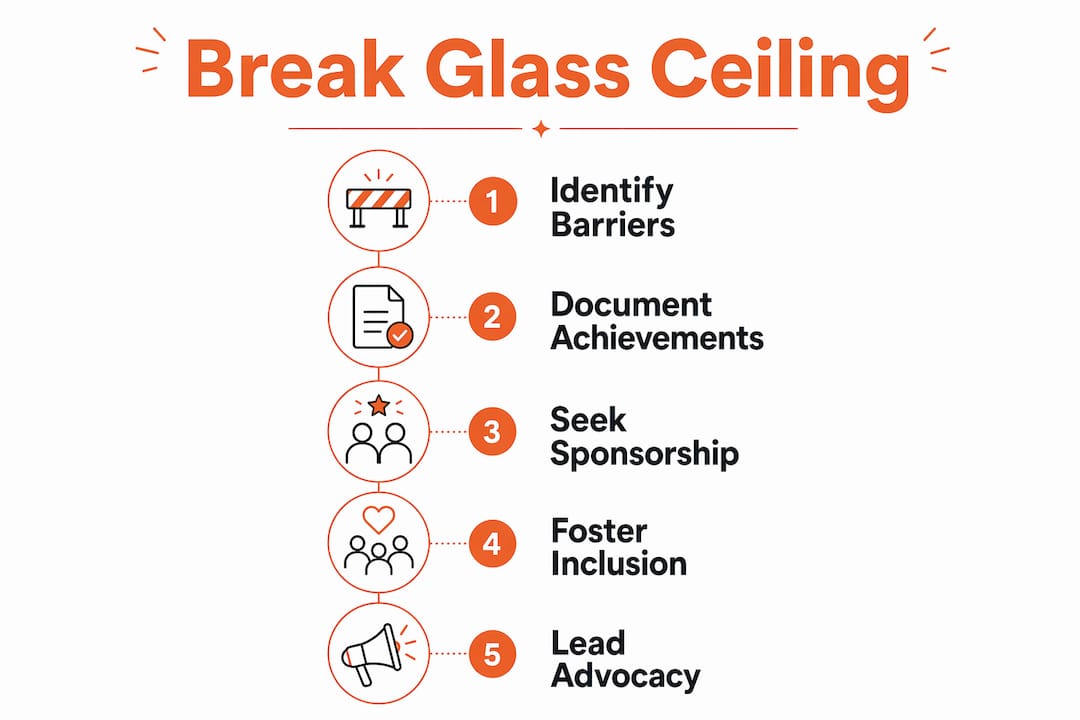
Understanding why LGBTQ+ career programs matter is the first step for organizations deciding where to invest their inclusion budgets.
Pro Tip: If you are a senior leader, identify one LGBTQ+ professional on your team and actively advocate for them in the next promotion cycle. Name them in conversations. Recommend them for high-visibility projects. That is sponsorship in practice.
Organizational practices that produce results
The following approaches have the strongest evidence base for dismantling LGBTQ+ workplace barriers:
- Transparent promotion criteria. When promotion decisions are based on published, objective criteria, subjective culture-fit assessments carry less weight.
- LGBTQ+ affinity groups with executive backing. Employee resource groups work best when senior leaders participate visibly, not just symbolically.
- Diversity hiring targets with accountability. Setting targets without tracking outcomes produces no change. Organizations that tie leadership accountability to diversity metrics see measurable improvement.
- Visible allyship from the top. Visible LGBTQ+ leaders directly influence whether LGBTQ+ professionals see a future at an organization. Representation at the top signals that advancement is genuinely possible.
How does organizational culture reinforce or dismantle the glass ceiling?
Organizational culture is where the rainbow glass ceiling does most of its work. Formal policies can prohibit discrimination. Culture determines whether LGBTQ+ professionals are actually included in the informal systems that drive advancement.
The “culture fit” standard is the clearest example. When leadership teams describe their ideal candidate as someone who “fits the culture,” they are often describing someone who resembles the existing leadership. Since most senior leadership in most industries skews heterosexual and cisgender, this standard functions as a structural filter against LGBTQ+ professionals, even when no one intends it that way.
Informal networking compounds the problem. Promotions rarely happen in formal review meetings alone. They happen because a senior leader mentioned a name at dinner, or because someone was included in a weekend trip that others were not invited to. LGBTQ+ professionals are frequently excluded from these informal circles, not through explicit rejection but through the quiet assumption that they would not fit in.
“Leadership biases about what an executive ‘looks like’ are among the most persistent drivers of the rainbow glass ceiling. These biases rarely appear in written policy. They show up in who gets invited, who gets championed, and who gets the benefit of the doubt.”
The business case for dismantling these barriers is concrete. Research shows that meaningful LGBTQ+ inclusion correlates with improved financial performance and brand reputation. Organizations that fail to dismantle LGBTQ+ advancement barriers suffer measurable losses in productivity and innovation. Inclusion is not just a social good. It is a business outcome.
Spotting the difference between performative and genuine inclusion is a skill. Knowing how to identify truly inclusive workplaces helps LGBTQ+ professionals make better career decisions and helps allies hold their organizations accountable.
Key Takeaways
The rainbow glass ceiling is a real, research-documented barrier that blocks LGBTQ+ professionals from leadership roles through informal culture, biased perceptions, and the absence of active sponsorship.
What I have learned about the rainbow glass ceiling after years of watching it operate
The part that surprises most people is how little of this barrier is intentional. The leaders who perpetuate the rainbow glass ceiling are often the same ones who genuinely believe their organizations are inclusive. They have diversity statements. They sponsor Pride events. They have an employee resource group. And yet the promotion data tells a different story.
What I have observed is that the gap between policy and practice is almost always cultural. The written rules are fine. The informal systems are where LGBTQ+ professionals get filtered out. A senior leader who would never discriminate explicitly will still invite the same familiar faces to the leadership retreat. They will still describe their ideal successor using language that maps onto the existing team. They will still use “culture fit” as a tiebreaker, not realizing that the culture they are protecting was built without LGBTQ+ voices at the table.
The most encouraging thing I have seen is what happens when one senior leader decides to sponsor an LGBTQ+ professional deliberately and visibly. It changes the calculus for everyone watching. Other LGBTQ+ professionals see that advancement is possible. Other leaders start asking themselves who they are not sponsoring. The role of visibility in LGBTQ+ careers is not symbolic. It is structural. When people see someone like them in a senior role, they stay. When they do not, they leave.
The work is not finished when a company hires an LGBTQ+ executive. It is finished when LGBTQ+ professionals at every level feel that the path to leadership is genuinely open to them. That requires sustained, specific action from the people who already hold power.
myGwork: a place to build the career you deserve
LGBTQ+ professionals should not have to navigate career barriers alone.
myGwork connects LGBTQ+ professionals and allies with inclusive employers, mentors, and a global community committed to real workplace equality. The platform offers job listings at LGBTQ±friendly organizations, networking events, and mentorship programs designed to help professionals move past the barriers that hold them back. Community-driven inclusion initiatives show what genuine support looks like in practice. Whether you are looking for your next role, a sponsor, or simply a community that understands what you face at work, myGwork is built for exactly that.
FAQ
What is the rainbow glass ceiling?
The rainbow glass ceiling is the invisible set of barriers that prevents LGBTQ+ professionals from advancing into senior leadership roles despite their qualifications. It operates primarily through informal cultural norms, leadership biases, and networking exclusion rather than explicit discrimination.
Why do LGBTQ+ professionals face a leadership gap despite higher education?
Research from IMD shows that LGBTQ+ individuals hold higher education degrees at greater rates than their heterosexual peers, yet gay men are 16% less likely to reach top executive roles. The gap is driven by informal barriers, not a lack of qualifications.
What does “covering” mean in the context of LGBTQ+ workplace barriers?
Covering refers to the practice of downplaying or concealing one’s LGBTQ+ identity at work to reduce career risk. Studies show it is widespread and directly suppresses authentic leadership presence and long-term career confidence.
What is the difference between mentorship and sponsorship for LGBTQ+ professionals?
Mentorship provides guidance and advice. Sponsorship means a senior leader actively advocates for an LGBTQ+ professional in promotion and hiring decisions. IMD research identifies sponsorship as the critical missing link to breaking through into executive roles.
How does organizational culture reinforce the glass ceiling?
Culture reinforces the glass ceiling through informal networking exclusion, “culture fit” assessments that favor heteronormative leadership norms, and leadership biases about what an executive should look like. These mechanisms operate outside formal HR processes and are harder to challenge than explicit policies.