
Career Planning for LGBTQ+ Expats Abroad: 2026 Guide
July 16, 2026Career planning for LGBTQ+ expats abroad is the practice of aligning professional goals with personal safety, legal protections, and workplace inclusion across international borders. The stakes are real: 1 in 3 LGBTQ+ graduates have reconsidered their career path due to recent political and social shifts. That figure signals how deeply identity and opportunity are intertwined for LGBTQ+ professionals thinking about international employment. This guide walks through every phase of that process, from financial preparation and targeted job searching to evaluating inclusive employers and building a sustainable life abroad.

What does career planning for LGBTQ+ expats abroad actually require?
Career planning for LGBTQ+ expats abroad means more than updating a resume and booking a flight. It requires a deliberate framework that accounts for visa law, local LGBTQ+ rights, employer culture, and personal well-being simultaneously. The professionals who succeed internationally treat this as a structured project, not a spontaneous move.
The global employment picture for LGBTQ+ expats is uneven. Countries like the Netherlands, Canada, and Portugal combine legal protections with active community support, while others offer economic opportunity with little social safety. Tax efficiency alone is not a reliable guide to destination quality. The countries with the strongest LGBTQ+ rights often fund that inclusivity through higher taxes and social services, which directly affects quality of life and career stability.

Visibility matters at every stage. 84% of young LGBTQ+ professionals say visible senior LGBTQ+ role models influence whether they accept a job offer. That is not a soft preference. It is a concrete signal about whether an organization’s inclusion commitment is real or performative.
What should LGBTQ+ expats do before starting an international job search?
Preparation separates expats who land well from those who struggle. The foundation is financial, legal, and informational, and each layer needs attention before any applications go out.
Build your financial runway first
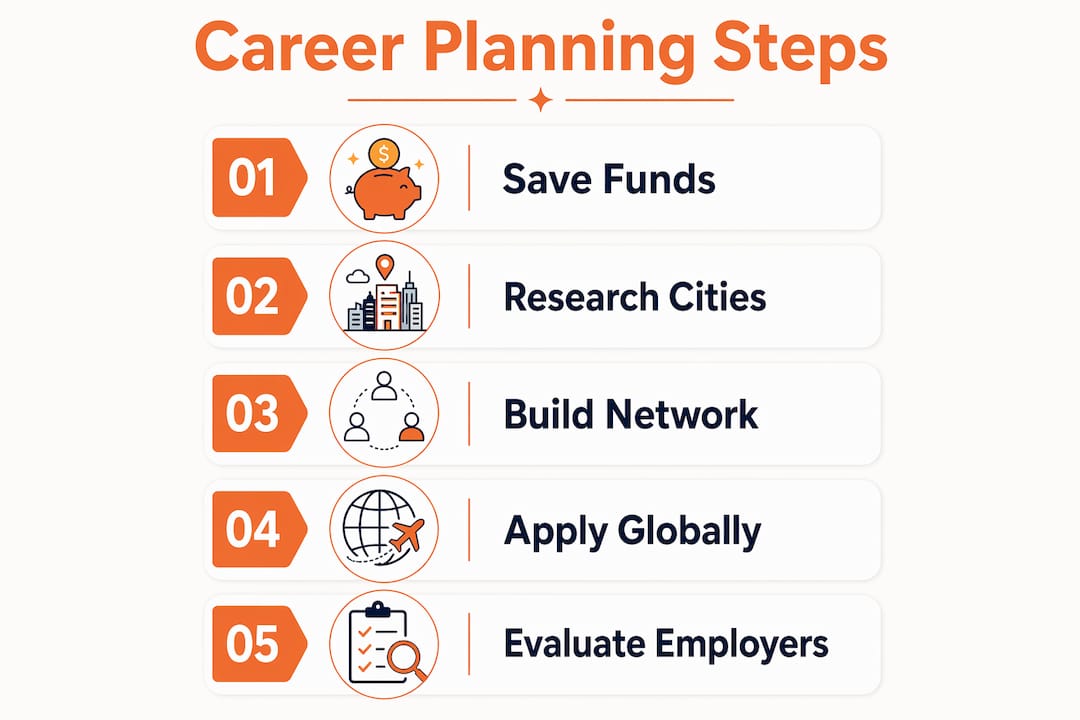
A financial safety net of 6–12 months of living expenses is the baseline before any international move. That buffer covers the gap between arrival and first paycheck, unexpected visa delays, and the cost of returning home if a situation becomes unsafe. Skipping this step is the single most common reason expat career plans collapse in the first year.
Complete your legal and document checklist
Within the first 30 days of serious planning, complete these steps:
- Assess visa feasibility for your target countries, including work permit categories and timelines.
- Consult an immigration attorney who has experience with LGBTQ+ applicants, since partnership recognition and name changes affect documentation.
- Order background checks and apostille any credentials you will need for foreign employers.
- Update identity documents to reflect your current legal name and gender marker before applying abroad.
- Research LGBTQ+ legal protections in each target country, including partnership recognition, anti-discrimination law, and healthcare access.
Run digital reconnaissance on your target cities
Generic safety indexes do not tell the full story. Social media hashtags like #QueerAmsterdam or #QueerLisbon on Instagram and TikTok reveal real lived experiences from LGBTQ+ residents. Expat Facebook groups and Reddit communities add ground-level context that no official index captures. Spend two to three weeks doing this research before committing to a destination.
Pro Tip: Join at least two active LGBTQ+ expat groups for your target city before you move. The connections you make there will be your first professional network on arrival.
How can LGBTQ+ expats design an effective international job search?
Most job seekers apply broadly and wait. That approach fails at the international level, where visa sponsorship, credential recognition, and cultural fit all add friction. A targeted 120-day job search cycle with tailored applications and direct networking consistently outperforms the scatter approach.
Here is how to structure that cycle:
- Days 1–30: Market clarity. Narrow your search to 2–3 target countries. Research which industries are actively hiring internationally in those markets. Identify 20–30 target employers with documented inclusion commitments.
- Days 31–60: Active applications. Use LinkedIn, local job boards for your target country, and niche industry platforms simultaneously. Search explicitly for terms like “relocation support,” “visa sponsorship,” and “global mobility” in job listings. These keywords filter for employers who have done this before.
- Days 61–90: Interviews and networking. Customize your CV to local market norms. German employers expect a photo and a detailed chronological format. British employers prefer concise two-page CVs without photos. French applications often include a cover letter written in French. Getting this wrong signals a lack of preparation.
- Days 91–120: Negotiation and visa processing. Once an offer arrives, negotiate relocation support, visa sponsorship timelines, and any identity-specific needs such as name change support in HR systems.
Use the remote-to-relocation pathway
Starting with a remote role at a multinational is one of the most effective paths to international relocation. Internal mobility after 6–12 months of remote work is a well-established pattern at large employers. You build credibility inside the organization, reduce the employer’s perceived risk, and position yourself for a sponsored transfer. This pathway also gives you time to assess the company’s actual inclusion culture before committing to a move.
Pro Tip: When applying to multinational employers, search their internal job boards for “global mobility” or “international transfer” programs. Many large companies run formal programs that LGBTQ+ employees underuse.
Platforms like Mygwork connect LGBTQ+ professionals with employers who have verified inclusion commitments, which cuts the research time on employer culture significantly. Checking employer branding for LGBTQ+ inclusion before applying saves time and protects your energy.
What criteria should LGBTQ+ expats use to evaluate employers abroad?
Employer evaluation is where most LGBTQ+ expats make their biggest mistake. They accept general diversity statements as evidence of inclusion. They are not. Only 9% of young LGBTQ+ professionals believe employers are truly proactive on inclusion. That skepticism is earned.
Use these criteria to evaluate any potential employer:
- Visible LGBTQ+ leadership. Are there openly LGBTQ+ people in senior roles? This is the single most reliable signal of genuine inclusion.
- Trans-inclusive healthcare benefits. Does the employer’s health plan cover gender-affirming care? This is a concrete policy check, not a values statement.
- Active employee resource groups (ERGs). Does the LGBTQ+ ERG run regular events, have executive sponsorship, and publish outcomes? A dormant ERG is a red flag.
- Specific DEI policies. Look for policies that name LGBTQ+ employees explicitly, not just broad “diversity” language.
- Local cultural context. An employer with strong inclusion policies in its home country may operate very differently in a local subsidiary where national law or culture conflicts with those policies.
“Checking for trans-inclusive healthcare benefits, ERG activities, and publicly visible LGBTQ+ leaders is more reliable than general inclusion claims. Optics and action are not the same thing, and the difference shows up in day-to-day work life.”
Learning how to spot truly inclusive workplaces before accepting an offer is one of the highest-value skills an LGBTQ+ expat can develop.
How should LGBTQ+ expats plan for long-term career growth abroad?
Landing the job is the beginning, not the destination. Long-term success abroad requires ongoing investment in networks, legal compliance, and personal well-being.
- Build local professional networks continuously. Attend industry events in your new city within the first 90 days. Introduce yourself as someone building their career in that market, not just passing through.
- Engage with LGBTQ+ organizations locally. Community connections and mentorship directly support career advancement and personal resilience. Local LGBTQ+ chambers of commerce exist in cities like Amsterdam, Toronto, and Lisbon and offer real professional value.
- Track your visa and legal status proactively. Work permit renewals, tax residency changes, and partnership recognition requirements shift over time. Missing a renewal deadline can end a career abroad abruptly.
- Preserve your identity while adapting culturally. Cultural adaptation is necessary and healthy. Erasing your identity to fit in is neither. The most successful LGBTQ+ expats find workplaces where both are possible simultaneously.
- Seek mentorship from LGBTQ+ professionals who have made the same move. Mygwork’s mentorship programs connect LGBTQ+ expats with professionals who have navigated international careers in specific markets.
- Protect your mental health as a professional asset. Isolation, identity stress, and cultural adjustment compound quickly. Mental health resources for LGBTQ+ professionals are not a luxury. They are part of a sustainable career plan.
The research is clear: moving toward career growth and community produces more durable expat success than moving away from a hostile environment. That distinction shapes every decision from destination choice to employer selection.
Key Takeaways
Successful international career planning for LGBTQ+ expats requires financial preparation, targeted job searching, rigorous employer evaluation, and ongoing community investment to achieve both professional growth and personal safety abroad.
What I have learned about planning an LGBTQ+ career abroad
The advice I see repeated most often about moving abroad as an LGBTQ+ professional focuses on legal protections and job boards. Both matter. But the factor that actually determines whether someone thrives internationally is whether they moved toward something specific or away from something painful.
I have seen professionals with strong credentials and solid savings land in cities with excellent LGBTQ+ rights and still struggle. The common thread is that they chose a destination based on what it was not, rather than what it offered them professionally and personally. The expats who build real careers abroad arrive with a named industry target, two or three specific employers in mind, and at least one community connection already made.
The employer evaluation piece is where I see the most costly mistakes. Accepting a role based on a company’s global diversity ranking, without checking whether the local office has any visible LGBTQ+ leadership, is a setup for disappointment. The role of visibility in LGBTQ+ careers is not symbolic. It predicts the day-to-day reality of whether you can bring your full self to work.
One more thing: the 120-day job search framework is not a rigid script. It is a forcing function that prevents the most common failure mode, which is applying broadly, waiting passively, and running out of runway before anything converts. Treat it as a project with milestones, not a hope with a deadline.
How myGwork supports LGBTQ+ expats in their career abroad
LGBTQ+ expats planning an international career move need more than job listings. They need a network that understands the specific intersection of identity and opportunity.
myGwork is a global inclusive career platform built specifically for LGBTQ+ professionals and the organizations committed to hiring them. The platform connects expats with verified inclusive employers, mentors who have navigated international careers, and a community of professionals across dozens of countries. Whether you are at the research stage or ready to apply, explore LGBTQ+ career opportunities on myGwork to find employers who have already demonstrated their commitment to inclusion, not just claimed it.
FAQ
What is the first step in career planning for LGBTQ+ expats abroad?
Build a financial safety net of 6–12 months of living expenses before starting your international job search. This buffer covers visa delays, relocation costs, and the time between arrival and your first paycheck.
Which countries are best for LGBTQ+ expat careers?
The Netherlands, Canada, and Portugal consistently combine strong legal protections with active LGBTQ+ communities and international job markets. Tax rates in these countries are higher, but the social infrastructure and workplace inclusion standards reflect that investment.
How do I know if an employer abroad is truly inclusive?
Check for visible LGBTQ+ leaders in senior roles, trans-inclusive healthcare in the benefits package, and an active employee resource group with executive sponsorship. Only 9% of young LGBTQ+ professionals believe employers are genuinely proactive, so concrete proof points matter far more than general diversity statements.
How long does an international LGBTQ+ job search typically take?
A focused international job search follows a 120-day cycle covering market research, applications, interviews, and visa processing. Narrowing your search to 2–3 target countries and using multiple platforms simultaneously keeps that timeline realistic.
Does Mygwork help LGBTQ+ expats find jobs abroad?
myGwork connects LGBTQ+ professionals with verified inclusive employers worldwide, along with mentorship programs and community resources tailored to international career planning. The platform is designed specifically for LGBTQ+ professionals and the organizations actively committed to hiring them.