
How to Sponsor LGBTQ+ Professionals for Promotion
July 14, 2026Sponsoring LGBTQ+ professionals for promotion is defined as actively using your organizational influence to open career pathways, not simply offering advice or encouragement. This practice, formally called executive sponsorship, differs from mentorship in one critical way: sponsors spend their own social capital to nominate, advocate, and create visibility for LGBTQ+ colleagues. Research confirms that active sponsorship requires advocates to nominate colleagues for visible projects and promotions. Knowing how to sponsor LGBTQ+ professionals promotion effectively means building systems, not just good intentions.

How to sponsor LGBTQ+ professionals’ promotion: the core framework
Executive sponsorship is the recognized industry term for what many organizations loosely call “advocacy.” The distinction matters. A mentor gives guidance. A sponsor gives opportunity. Systemic sponsorship embeds support into performance reviews and succession planning rather than treating it as a one-off gesture.
Structured programs prove this works in practice. Pride Pathways, a 5-month sponsorship program for LGBTQ+ professionals, costs around $7,500 per participant and includes coaching, leadership retreats, and senior manager training. Encompass HK runs a 9-month mentoring program requiring mentors to have 10 or more years of experience. Both programs demonstrate that duration and structure determine outcomes.
The core framework rests on three pillars: organizational readiness, structured program design, and ongoing accountability. Employers who skip the first pillar often find their sponsorship efforts collapse under the weight of unchecked bias and unclear expectations. Each pillar builds on the last.
What organizational prerequisites must you establish first?
Sponsorship programs fail without a foundation. Anti-discrimination policies and inclusive HR frameworks are the baseline, not the finish line. Without them, even the most committed sponsor cannot protect LGBTQ+ professionals from systemic barriers.
Bias audits and diversity training address the hidden obstacles that block promotions before they reach a decision-maker’s desk. Subjective “culture fit” metrics are often used to mask bias in promotion decisions. Replacing vague criteria with objective, metric-based evaluations is a prerequisite, not an optional upgrade.
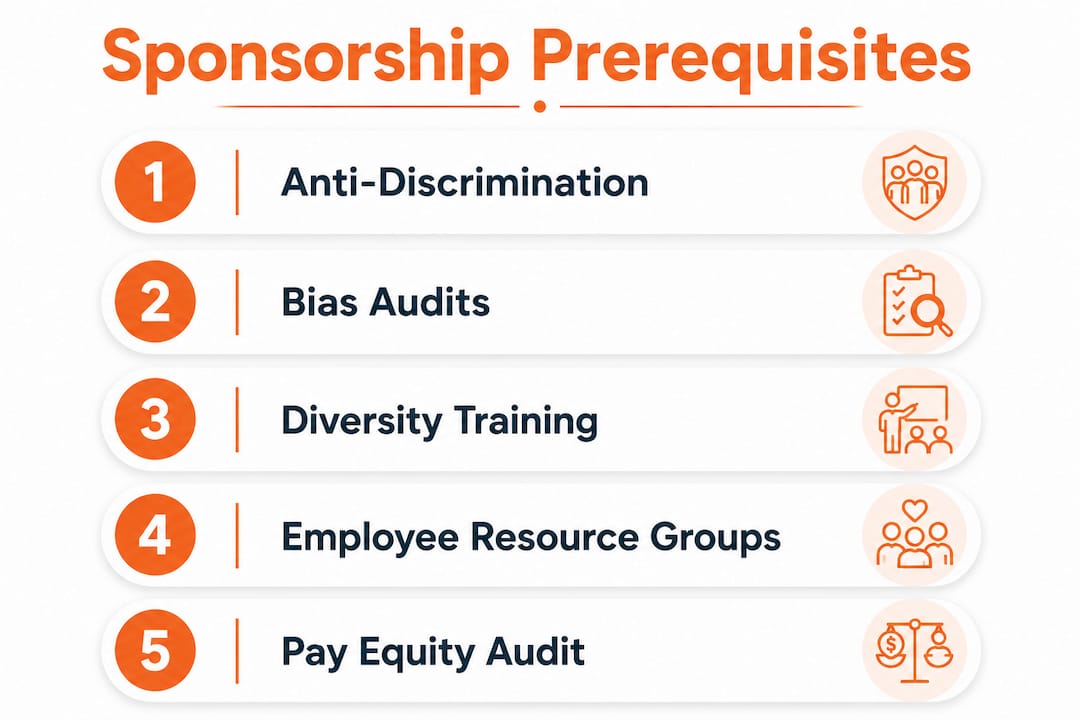
Employee Resource Groups (ERGs) are another non-negotiable. Well-funded ERGs with direct lines to executive leadership strengthen the entire inclusion climate. They give LGBTQ+ professionals a community and give sponsors a structured channel for advocacy.
Pro Tip: Run a pay equity audit before launching any sponsorship program. Sponsoring someone into a promotion that still underpays them relative to peers undermines the entire effort. Mygwork’s guide on equitable pay strategies offers a practical starting point.
How can employers implement structured sponsorship programs?
Structured sponsorship programs follow a repeatable process. The steps below reflect best practices drawn from programs like Pride Pathways and Encompass HK, adapted for internal corporate use.
- Define sponsorship clearly. Communicate to all managers that sponsorship means active advocacy, not passive support. Sponsors nominate, endorse, and publicly champion LGBTQ+ colleagues for roles and projects.
- Identify high-potential LGBTQ+ professionals. Use objective performance data, not informal impressions. Partner with ERGs to surface talent that may be overlooked in traditional succession planning conversations.
- Match sponsors with intention. Pair LGBTQ+ professionals with senior leaders who have the influence and willingness to spend social capital. A sponsor without organizational power cannot open doors.
- Train managers on allyship micro-actions. Daily micro-actions build the trust that makes sponsorship credible. These include using correct pronouns, calling out microaggressions in meetings, and actively including LGBTQ+ colleagues in high-visibility conversations.
- Embed sponsorship into performance reviews. Sponsors should have formal accountability for the career progress of the professionals they champion. This makes sponsorship a job responsibility, not a favor.
- Integrate into succession planning. LGBTQ+ professionals must appear in succession pipelines at every level. If they are absent from those conversations, the sponsorship program has not reached the right rooms.
- Measure and report outcomes. Track promotion rates, compensation changes, and retention for sponsored professionals. Share results with leadership quarterly.
The table below compares two program models by key features, using generic categories rather than vendor names.
Pro Tip: Avoid the tokenism trap. Sponsoring one LGBTQ+ professional per cycle and calling it a program signals performative effort. Aim for cohort-based sponsorship that creates peer networks alongside individual advancement.
What are common challenges in LGBTQ+ sponsorship programs?
The most common failure in sponsorship programs is confusing mentorship with sponsorship. Mentorship gives LGBTQ+ professionals advice on how to navigate the organization. Sponsorship changes the organization so they can advance through it. Organizations that rely only on mentoring programs without active advocacy leave the structural barriers entirely intact.

Subjective “culture fit” criteria present the second major barrier. These vague standards allow decision-makers to reject LGBTQ+ candidates for promotion without ever naming the real reason. Sponsors must push back in the room where decisions are made, demanding that every rejection be tied to a specific, measurable performance gap.
Backlash from within the organization is real and should be anticipated. Some colleagues and managers will resist sponsorship programs as preferential treatment. The counter-argument is simple: sponsorship corrects a system that already favors certain groups by default. Framing sponsorship as equity, not advantage, reduces resistance without requiring lengthy debates.
Pay transparency is a related challenge. Promoting someone without addressing compensation gaps reinforces inequity even when the title changes. Sponsors should advocate for both the role and the pay that comes with it.
Pro Tip: Build a sponsorship scorecard. Track each sponsored professional’s promotion timeline, compensation change, and retention at 12 months. Share the data with HR leadership. Numbers make the program’s value undeniable and keep sponsors accountable.
What tools, networks, and partnerships strengthen LGBTQ+ career growth?
External partnerships multiply the impact of internal sponsorship programs. Joining LGBTQ+ business networks gives employers access to leadership development resources, peer benchmarking, and talent pipelines that internal programs alone cannot build.
Philanthropic commitment signals authentic support. Kiehl’s committed $150,000 in 2026 to LGBTQ+ youth homelessness organizations as part of a multi-year contribution exceeding $1.4 million. That level of long-term commitment builds credibility that a single Pride month campaign never could. Corporate DEI programs like J&J’s Credo Day show how large organizations integrate community investment into their core values, not just their marketing calendar.
Visibility inside the organization matters as much as external partnerships. Mygwork’s research shows that visible LGBTQ+ leadership directly influences where LGBTQ+ graduates choose to work. Sponsoring professionals into visible roles creates a compounding effect: each promoted leader attracts more LGBTQ+ talent to the organization.
Actions employers can take right now to build a resource-rich sponsorship ecosystem:
- Fund ERGs with a dedicated annual budget, not ad hoc requests
- Partner with LGBTQ+ leadership development programs for cohort sponsorship
- Publish promotion and pay equity data segmented by LGBTQ+ identity
- Sponsor LGBTQ+ professional events year-round, not only in june
- Use platforms like Mygwork to build employer brand visibility among LGBTQ+ talent
Key Takeaways
Effective LGBTQ+ professional sponsorship requires active advocacy, structural accountability, and sustained organizational commitment, not one-time gestures.
The difference between showing up and actually opening doors
Most organizations I have observed treat LGBTQ+ sponsorship as a communications problem. They announce programs, publish statements, and update their websites. What they rarely do is put a senior leader in a room and ask them to spend real political capital on a colleague’s promotion.
That gap is where most sponsorship programs die. The structure exists on paper. The accountability does not exist in practice. I have seen well-designed programs collapse because no one tracked what happened to the professionals who went through them. Six months after the cohort ended, the participants were back in the same roles, with the same managers, facing the same unspoken barriers.
The programs that work share one trait: sponsors are held accountable by name. Their performance reviews include a question about the career progress of the LGBTQ+ professionals they champion. That single change converts sponsorship from a voluntary gesture into a professional responsibility.
The retention data supports this. Structured LGBTQ+ support programs show measurable retention improvements when they are embedded in management practice rather than run as standalone initiatives. Retention is the clearest signal that sponsorship is working. If sponsored professionals are leaving, the program is not reaching the decisions that matter.
My honest advice to employers: stop measuring inputs and start measuring outcomes. Count promotions, pay increases, and retention rates for LGBTQ+ professionals by name. Publish those numbers internally. The organizations willing to do that are the ones building something real.
How myGwork connects employers with LGBTQ+ talent and sponsorship resources
myGwork is a global professional networking platform built specifically for LGBTQ+ professionals, allies, and the organizations committed to inclusion. Employers use myGwork to build their employer brand, post roles at LGBTQ+ friendly organizations, and connect directly with a talent pool that prioritizes inclusive workplaces.
For organizations building or refining sponsorship programs, myGwork offers access to LGBTQ+ career resources, networking events, and employer branding tools that make inclusion visible to the professionals you want to attract and retain. Partnering with myGwork positions your organization as a credible, active supporter of LGBTQ+ career advancement, not just a company with a policy on paper. Visit myGwork.com to connect your sponsorship efforts with a community that is actively looking for employers who follow through.
FAQ
What is the difference between sponsorship and mentorship for LGBTQ+ professionals?
Sponsorship requires a senior leader to actively advocate for an LGBTQ+ professional’s promotion by spending their own organizational influence. Mentorship provides guidance and advice but does not change the structural barriers blocking advancement.
How long should a structured LGBTQ+ sponsorship program run?
Programs like Pride Pathways run for 5 months, while Encompass HK’s model runs for 9 months. Longer programs with multiple leadership touchpoints and manager training produce deeper, more sustained career outcomes.
What is the biggest mistake employers make in LGBTQ+ sponsorship?
The most common mistake is substituting mentorship for sponsorship and never requiring sponsors to take visible, accountable action. Without formal accountability in performance reviews, sponsorship remains a gesture rather than a system.
How do you measure whether an LGBTQ+ sponsorship program is working?
Track promotion rates, compensation changes, and 12-month retention for every sponsored professional. If those numbers do not improve, the program is not reaching the decisions that determine career outcomes.
Why do “culture fit” criteria undermine LGBTQ+ promotion efforts?
Subjective culture fit standards give decision-makers cover to reject LGBTQ+ candidates without citing a measurable reason. Replacing them with objective, output-based criteria removes that cover and forces fair evaluation.