
What Workplace Diversity Means and Why It Matters at Work
August 18, 2026Workplace diversity means employing people who differ across race, gender, age, sexual orientation, disability, religion, socioeconomic background, and ways of thinking, spanning traits present at birth and ones acquired through life and career.
It matters because organizations that build diverse teams and pair them with genuine inclusion tend to make better decisions, attract wider talent pools, and hold onto employees longer. The practical takeaway: representation alone accomplishes little without the inclusive practices that let different people actually contribute and stay.

What that looks like in practice, right now:
- Widen your hiring funnel beyond the networks you already know.
- Track outcomes by role and level, not just headcount at the door.
- Treat inclusion and belonging as separate goals from diversity itself, because they are.
Key Takeaways
Workplace diversity produces measurable benefits only when paired with inclusive leadership, transparent measurement, and accountability at the top.
An Editorial Note on Where This Goes Next
The business case for diversity and the human-rights case for it aren’t competing arguments, they’re the same argument told two ways. What gets underestimated is how much inclusion, not headcount, decides whether either case holds up over time. Watch leadership pipelines next: that’s where most organizations’ stated commitments quietly fall apart, and where intersectional practice, treating overlapping identities as more than the sum of their parts, will separate serious programs from cosmetic ones.
What Is Workplace Diversity, Exactly? Dimensions and Examples
Diversity researchers split the concept into two buckets: inherent traits you’re born with (race, sex, age, some disabilities) and acquired traits you gain through experience (education, work history, language skills, religion adopted later in life). A second, related split separates surface-level diversity, the things you notice on sight, from deep-level diversity, the values, personality traits, and thinking styles that surface only after working with someone for a while. The Coursera overview on workplace diversity frames the concept exactly this way, and it’s the definition worth anchoring to.
In practice, the list of dimensions is long: race and ethnicity, gender identity, sexual orientation discrimination at work, age, physical and cognitive disability, socioeconomic background, education, religion, native language, and cognitive style, meaning how people process information and solve problems. A hiring panel that includes someone who grew up working class alongside an Ivy League graduate is practicing socioeconomic diversity, even if nobody labels it that way. A product team that pulls in a colorblind engineer to test its color-coded dashboard before launch is putting cognitive and disability diversity to direct use. Neither example requires a diversity program. Both require someone in the room who thinks or lives differently than the majority.
Diversity, Inclusion, and Belonging Aren’t the Same Thing
Diversity describes who is in the room. Inclusion describes whether they’re actually invited to speak, lead projects, and shape decisions once they’re there. Belonging describes how people feel: safe, valued, and free to bring their full selves to work without editing themselves down. You can hire a diverse workforce and still fail on all three fronts if the culture only rewards people who look and sound like the existing leadership.

This distinction is not academic. Research on inclusive leadership shows that a strong diversity climate increases how much employees identify with their organization and boosts positive behaviors like speaking up, while a weak one increases quiet exits and disengagement, according to findings published on inclusive leadership and diversity climate. Diversity without inclusion tends to leak talent out the back door as fast as recruiting brings it in the front.
Pro Tip: Tokenism usually shows up as a single visible hire with no peer support, no promotion path, and no real decision-making authority. Genuine inclusion looks like multiple people from the same underrepresented group at different levels of seniority, not just one person carrying the weight alone.
Why Diversity Is Good for the Workplace: The Evidence
Diverse, well-managed teams solve problems faster because they bring more angles to the table before a decision gets locked in. That’s the throughline across most of the credible research on this topic, and it shows up in a handful of concrete ways.
- Wider talent pool. Companies that widen who they recruit and promote simply have more qualified candidates to choose from.
- Sharper customer insight. Teams that reflect their customer base tend to catch blind spots that a homogenous team misses, particularly in product design and marketing.
- More creativity and better decisions. Groups with varied backgrounds challenge each other’s assumptions, which slows down groupthink and produces stronger final calls, an advantage documented in earlier MIT research on workplace diversity and firm performance.
- Higher engagement and retention. People stay where they feel represented and heard.
- Reputation and financial performance. McKinsey’s ongoing research finds that companies with more diverse leadership teams are consistently more likely to financially outperform their peers.
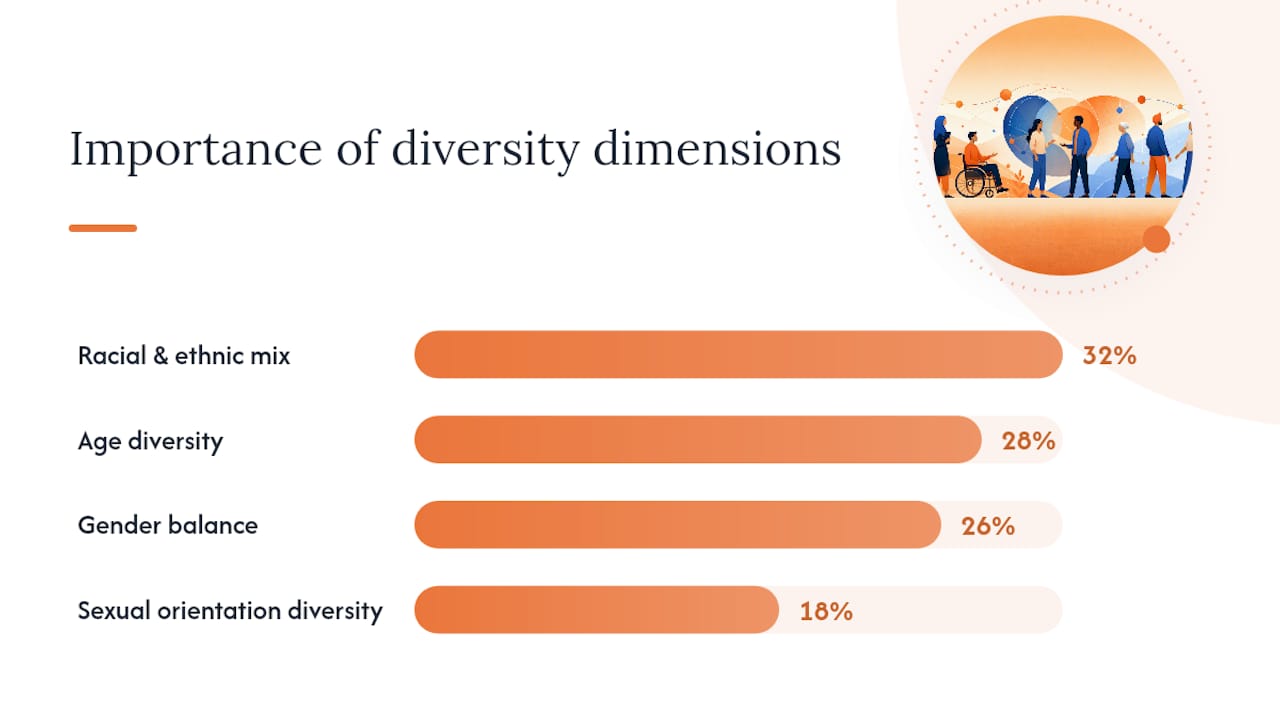
Public attitudes back up how much this matters to the workforce itself. A 2023 Pew Research Center survey found that about 32% of workers place high importance on racial and ethnic mix at their workplace, 28% on age diversity, 26% on gender balance, and 18% on sexual orientation diversity, with women consistently more likely than men to rate these measures as important.
One caveat matters here: most of this evidence is correlational, not proof of direct cause and effect. McKinsey itself frames the finding as diverse companies being “more likely” to outperform, not guaranteed to. The benefit shows up reliably when inclusion and leadership accountability are already in place. Without those, diversity metrics can improve while performance stays flat.
The Common Ways Diversity Efforts Backfire
Diversity programs fail in fairly predictable ways, and most of the failure modes trace back to treating representation as the finish line instead of the starting point.
Token hiring is the most visible mistake: bringing in one person from an underrepresented group, spotlighting them in marketing materials, and then offering no peer network, no mentorship, and no realistic path to promotion. Unconscious bias in performance reviews and promotion decisions is the quieter version of the same problem, where diverse hires get in the door but stall out well below senior levels. ILO research backs this up directly: employees generally report feeling included, but organizational support for career advancement is measurably weaker, and full inclusion is felt more strongly at senior levels than junior ones, according to the ILO’s diversity and inclusion study.
Watch for a few red flags: diversity initiatives that live entirely inside HR with no executive sponsorship, public commitments with no internal measurement behind them, and leadership pipelines that stay homogenous no matter how diverse entry-level hiring gets. Backlash and performative messaging, DEI statements with no operational follow-through, tend to erode trust faster than saying nothing at all. The fix isn’t more messaging. It’s tighter measurement and leadership accountability, which is where the next section goes.
How to Build Diversity That Actually Lasts
Getting diversity right is less about a single initiative and more about stacking several reinforcing practices so none of them carries the whole weight alone.
- Get C-suite commitment first. Diversity efforts backed by visible executive sponsorship consistently outperform ones run solely out of HR, a pattern IMD’s research on DEI implementation confirms across multiple organizations.
- Fix the hiring process before you fix headcount. Use objective job criteria, structured interview scorecards, and blind resume screening steps where possible to reduce bias before it enters the pipeline.
- Set structured promotion criteria. Vague “leadership potential” language in review cycles tends to reward familiarity over merit. Written, consistent criteria close that gap.
- Build mentorship and sponsorship programs. Mentorship helps people learn the ropes; sponsorship means someone with power actively advocates for their advancement. Organizations need both, particularly for sponsoring professionals into promotion who might otherwise get passed over.
- Support employee resource groups. Employee networks give people community and a direct channel to leadership, which strengthens belonging far more than a one-off training session.
- Offer flexible benefits and accommodations. Flexible working arrangements, parental leave that doesn’t default to one gender, and reasonable accommodations for disabilities all signal that policy matches rhetoric.
Managers carry more weight here than most programs give them credit for. Simple behaviors, rotating who speaks first in meetings, actively crediting ideas to their source, and checking who’s getting stretch assignments, do more for inclusion day to day than any training module.
Pro Tip: Tie DEI goals directly into manager performance reviews and compensation decisions. Programs that stay separate from how people get evaluated and paid tend to quietly disappear within a year or two.
Measuring Diversity Progress: The KPIs That Matter
You can’t manage what you don’t measure, and diversity is no exception. Short-term metrics like hiring and offer-acceptance rates show whether your funnel is working. Long-term metrics like promotion rates and retention by demographic group show whether inclusion is actually happening once people are hired. Both matter, and tracking only the first set is a classic way diversity measurement programs mislead themselves about progress.
What the Research Actually Shows, and Where It’s Thin
The strongest, most consistent finding across the major research bodies is that diversity’s benefits are conditional, not automatic. McKinsey’s work links diverse leadership to a higher likelihood of financial outperformance. The UN Human Rights office frames well-implemented DEI as both a human-rights obligation and a business asset. Pew’s survey work shows the workforce itself cares about these dimensions, particularly along gender lines. Academic literature synthesized by the Annual Reviews survey of workforce diversity research is more cautious, noting that measurement and implementation complexity often muddy clean causal claims.
Effective diversity, equity, and inclusion measures, when consistently aligned with international human rights standards, can meaningfully address systemic discrimination while strengthening business resilience and public trust, according to the UN Human Rights brief on DEI.
The takeaway for anyone building a business case: cite the correlation honestly, and pair it with the operational discipline, leadership accountability, transparent measurement, that turns correlation into results.
What LGBTQ+ Inclusion Looks Like in Practice
Genuine LGBTQ+ inclusion tends to include visible LGBTQ+ leaders, targeted recruitment through platforms built for the community, employer profiles that disclose real policies rather than slogans, active ERGs, and allyship training with follow-through. Visible leadership matters to candidates weighing where to apply. Before joining any organization, check for signs of authentic inclusion rather than performative statements. Mygwork has built its platform around exactly this gap between claim and practice.