
Why track diversity metrics? Real impact for LGBTQ+ inclusion
April 30, 2026
Inclusive organizations consistently outperform their peers, yet most still lack the measurement systems to prove it. Companies in the top quartile for gender diversity are 25% more profitable, and inclusive cultures are twice as likely to meet financial targets. For LGBTQ+ professionals, the gap between organizational promises and lived experience remains wide. The organizations closing that gap share one thing in common: they measure what matters. This guide explains exactly what diversity metrics are, which ones move the needle for LGBTQ+ inclusion, and how to use data responsibly to drive real, lasting change.
Key Takeaways
What are diversity metrics and why do they matter?
Diversity metrics are the measurable data points organizations use to understand who is in the workforce, how people experience that workplace, and whether inclusion efforts are actually working. They break down into two broad types.
Quantitative metrics cover the numbers: demographic headcounts, pay equity gaps, hiring rates, promotion rates, and retention figures. Qualitative metrics capture the human side: engagement surveys, belonging scores, and assessments of psychological safety. The strongest DEI programs use both.
According to best practices in the field, key methodologies include quantitative metrics such as demographics and pay equity alongside qualitative data like surveys on belonging and psychological safety. Relying on just one type gives you half the picture.
Here’s why that gap matters. Representation alone is not enough. An organization can hit a demographic target while its LGBTQ+ employees quietly disengage because the culture never changed. Metrics expose those hidden dynamics before they become retention crises.
For LGBTQ+ professionals specifically, LGBTQ+ workplace inclusion is not just about counting bodies in seats. It is about measuring whether people feel safe, valued, and able to advance.

The business case reinforces the human one. Inclusive companies are 70% more likely to capture new markets. That is not a soft benefit. That is competitive advantage.
Core diversity metrics typically include:
- Demographic representation by role level, department, and identity
- Pay equity analysis across gender, race, and LGBTQ+ status
- Hiring and promotion rates broken down by identity group
- Retention and turnover compared across demographic segments
- Engagement and belonging scores from regular employee surveys
- Psychological safety indicators gathered through anonymous feedback
“You can’t change what you don’t measure.” This principle sits at the heart of every effective DEI program. Without a baseline, organizations are essentially guessing whether their efforts are working.
The shift from intention to accountability happens the moment you put numbers on the table. Metrics make vague commitments concrete and give teams something to track, improve, and report on with honesty.
Essential metrics for tracking LGBTQ+ inclusion
Not all diversity metrics are created equal when it comes to LGBTQ+ inclusion. Some standard HR dashboards overlook the specific data points that reveal whether LGBTQ+ employees are truly thriving, or just tolerating their workplace.
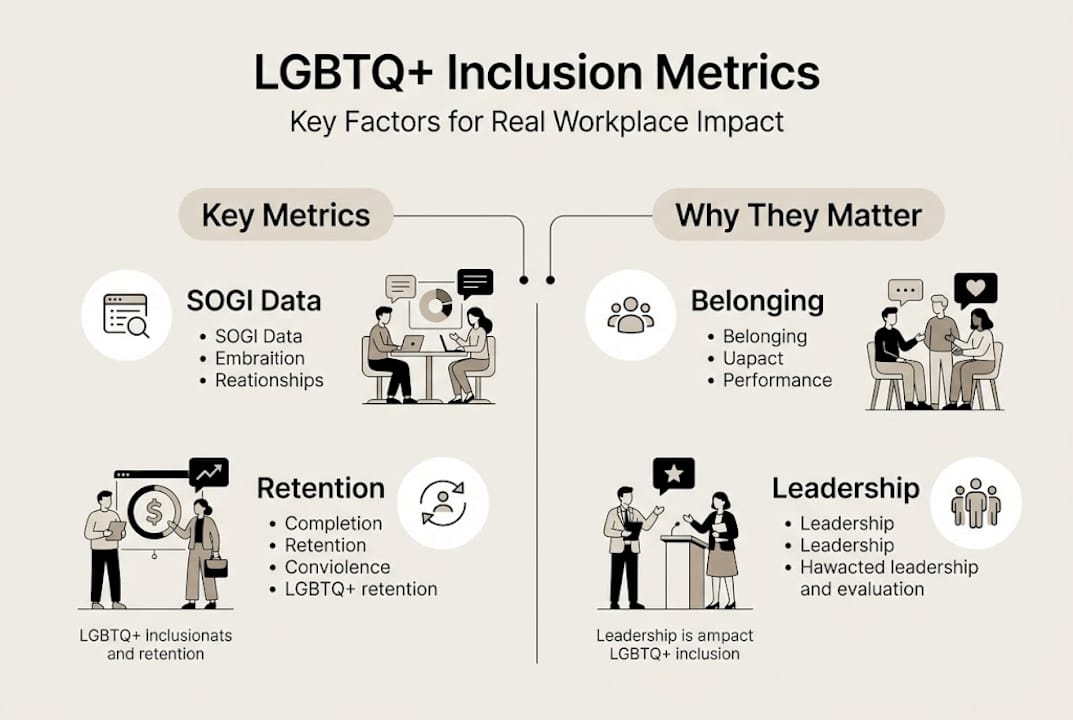
SOGI data (Sexual Orientation and Gender Identity) is the most direct measure. It tells you how many LGBTQ+ employees you actually have, which roles they occupy, and whether they are advancing at the same rate as their peers. 844 companies now track SOGI data in their HRIS systems, signaling growing industry recognition that this data is essential, not optional.
The privacy concern is real and should be taken seriously. SOGI data must always be collected voluntarily, stored separately from general HR records, and handled with strict confidentiality protocols. When employees trust the process, participation rates rise and the data becomes genuinely useful.
Beyond SOGI, the following metrics are high-impact for LGBTQ+ inclusion:
The retention number is striking. 34% of LGBTQ+ employees have left a job because the environment was not accepting. That figure represents enormous hidden costs in recruiting, onboarding, and lost institutional knowledge. Tracking turnover by SOGI status makes that cost visible.
Visible LGBTQ+ leaders are also a measurable metric worth prioritizing. When 84% of LGBTQ+ graduates say diverse leaders influence their job choices, leadership representation becomes a direct recruiting and retention lever.
Pro Tip: Pair quantitative metrics like retention rates with qualitative data like belonging survey scores. When both trend positively together, you have real evidence that culture is changing, not just headcount.
Organizations that support programs boost retention by up to 35% demonstrate that targeted LGBTQ+ support initiatives, when measured correctly, produce verifiable returns.
How to collect and analyze diversity data responsibly
Identifying the right metrics is step one. Actually collecting reliable, ethical data is where many organizations stumble. The process matters as much as the outcome.
Here are six steps to build a responsible data collection system:
- Use voluntary self-identification. Never make SOGI disclosure mandatory. Voluntary participation protects employees and produces more honest data.
- Separate SOGI data from general HR records. Store sensitive identity data in a dedicated, access-controlled system to limit exposure.
- Communicate purpose clearly. Employees are more likely to participate when they understand exactly how their data will be used and protected.
- Anonymize reporting at the analysis stage. Aggregate data before sharing with leadership to prevent inadvertent identification of individuals in small groups.
- Run funnel analysis across the hiring pipeline. Track diversity from applicant pool through offer acceptance at every stage to identify where LGBTQ+ candidates are dropping out.
- Complement surveys with focus groups. Quantitative data tells you what is happening; qualitative conversations tell you why.
Privacy risks in SOGI collection are real. Require confidentiality protocols, informed consent, and legal compliance at every step. Organizations that skip this groundwork risk both legal exposure and the trust of the employees they are trying to support.
“Data without trust is just surveillance.” For LGBTQ+ employees who may have experienced discrimination, the assurance that their information is safe is not a nice-to-have. It is the foundation of participation.
Pay transparency and wage gap analysis is one area where responsible data collection pays immediate dividends. Organizations that analyze compensation through an LGBTQ+ lens often find disparities that were invisible without the data.
Pro Tip: Use purpose-built diversity hiring tools to automate data collection, reduce manual error, and ensure consistent methodology across business units.
The goal is a system where employees trust the process enough to participate honestly, and leaders trust the data enough to act on it.
From measurement to lasting impact: Using metrics to drive real change
Collecting data is just the beginning. The organizations that see genuine LGBTQ+ inclusion gains are the ones that translate numbers into action, then measure whether those actions worked.
Numbers alone don’t guarantee DEI success. Structural reforms and acting on findings are required to avoid performative DEI, which means publishing diversity reports without changing anything substantive. That approach does not just fail to help. It actively damages trust.
Here is what action-oriented metric use looks like in practice:
- Pay audits triggered by compensation equity data, with corrective adjustments made transparently
- Bias training targeted at the pipeline stages where LGBTQ+ candidates or employees show disproportionate attrition
- Policy reviews informed by engagement survey data, such as updating parental leave or healthcare coverage based on LGBTQ+ employee feedback
- Leadership development programs designed specifically to increase LGBTQ+ representation at the senior level
- Public reporting of diversity metrics, which creates external accountability and signals commitment to candidates
Longitudinal tracking is critical. A one-time snapshot tells you where you are. Tracking the same metrics over two, three, or five years tells you whether your interventions are working. Without that timeline, you are making decisions based on incomplete evidence.
Top scores on the HRC Corporate Equality Index correlate directly with higher net income, confirming that structured LGBTQ+ inclusion programs are not just ethically sound but financially strategic.
The impact of celebrating Pride Month is measurable too. Organizations that treat cultural recognition as part of a broader inclusion strategy see up to 25% better retention, a figure that only becomes visible when you are tracking retention data in the first place.
Perspective: Why numbers alone are not enough for true LGBTQ+ inclusion
Having walked through the tactical steps, it is worth pausing to say something that data dashboards cannot capture on their own: metrics are a means, not an end.
The temptation in DEI work is to treat a good diversity report as evidence of a good culture. It rarely is. A company can have strong SOGI representation numbers while its LGBTQ+ employees navigate daily microaggressions, avoid disclosing their identity, and quietly plan their exit. Headcount is not culture.
Numbers-driven DEI fails to create durable change without structural reform. That means interrogating who holds decision-making power, which voices are heard in policy discussions, and whether intersectional identities such as LGBTQ+ people of color or transgender professionals are specifically represented in both the data and the interventions.
Belonging cannot be fully quantified, but it can be approximated through the right qualitative measures. Organizations that are ranked best for diversity share a common thread: they listen as hard as they measure. The metrics point to where to look. The culture work is what actually changes lives.
Make inclusion measurable—and real—with myGwork
Tracking diversity metrics is one of the most powerful tools available to organizations committed to LGBTQ+ inclusion, but knowing where to start and finding community along the way makes all the difference.
myGwork connects LGBTQ+ professionals and allies with organizations that take inclusion seriously and measure it rigorously. Whether you are a professional seeking an employer with genuine commitment or an organization looking to benchmark your progress, the LGBTQ+ hiring network at myGwork offers job listings, employer spotlights, educational resources, and a global community built around authentic inclusion. Join a network where diversity is not just tracked but genuinely valued, and take the next measurable step in your inclusion journey today.
Frequently asked questions
What are the risks of collecting LGBTQ+ diversity data?
The primary risks are breaches of privacy and misuse of sensitive information. These can be significantly reduced through voluntary self-identification, strict confidentiality protocols, and full legal compliance at every stage of the data lifecycle.
Which diversity metrics have the biggest impact on LGBTQ+ workplace inclusion?
Metrics like SOGI data participation, leadership visibility, retention rates, and belonging survey scores offer the most actionable insights. Effective metrics include SOGI data tracking, retention analysis, and regular engagement measurement.
How do organizations ensure diversity metrics lead to real change?
Organizations must build structured follow-through around their findings, including pay audits, leadership training, and policy reform. Structure intervention and measure outcomes transparently over time to avoid the trap of performative DEI.
Should small organizations track diversity metrics too?
Absolutely. Even small organizations benefit because metrics build a foundation for inclusion and can surface hidden inequities early. Tracking metrics is useful for organizations of every size, not just large enterprises with dedicated DEI teams.