
How to Source Passive LGBTQ+ Candidates in 2026
July 20, 2026Sourcing passive LGBTQ+ candidates is defined as the proactive identification and outreach to LGBTQ+ professionals who are not actively job searching but are open to the right opportunity. This practice sits within the broader discipline of diversity sourcing, and it demands a different playbook than standard passive recruiting. 84% of LGBTQ+ graduates say visible LGBTQ+ role models in senior leadership influence their decision to accept a job offer. That number tells you exactly what passive candidates are evaluating before they ever respond to a recruiter. Knowing how to source passive LGBTQ+ candidates means understanding that trust, authenticity, and visible inclusion come before any outreach message lands.

How to source passive LGBTQ+ candidates: which channels actually work?
The most effective sourcing channels for passive LGBTQ+ talent sit outside the standard LinkedIn search. General job boards and professional networks carry a structural bias toward candidates who already exist in your network or who match traditional credential profiles. That bias systematically filters out qualified LGBTQ+ professionals who have built careers through non-traditional paths.
Community-rooted platforms and organizations are the starting point. Groups like Lesbians Who Tech and Out in Tech host active professional communities where members share work, collaborate on projects, and attend events. These spaces give recruiters direct access to skilled professionals who are not broadcasting job interest but are visible and reachable.
Technical talent specifically lives in open-source communities on GitHub and in Slack and Discord servers organized around specific skills or identities. Searching GitHub for contributors to relevant projects surfaces candidates by demonstrated capability rather than resume keywords. That shift matters because skills-based sourcing uncovers hidden qualified LGBTQ+ talent that keyword algorithms on mainstream platforms routinely miss.
LGBTQ+ professional events, both virtual and in-person, are another direct channel. myGwork hosts networking events that connect recruiters with LGBTQ+ professionals in a context where inclusion is already established. Showing up at these events as a recruiter signals genuine interest rather than transactional outreach.
- Niche community platforms: myGwork, Lesbians Who Tech, Out in Tech
- Open-source and technical communities: GitHub project contributions, Slack and Discord servers organized by skill or identity
- Professional events: LGBTQ+ career fairs, myGwork networking events, Pride professional summits
- Academic pipelines: LGBTQ+ student organizations at universities and graduate programs
Pro Tip: Before posting a role in any LGBTQ+ community space, spend time in that community first. Recruiters who engage authentically before recruiting are received far better than those who appear only when they have a vacancy.
How do you craft outreach that passive LGBTQ+ candidates actually respond to?
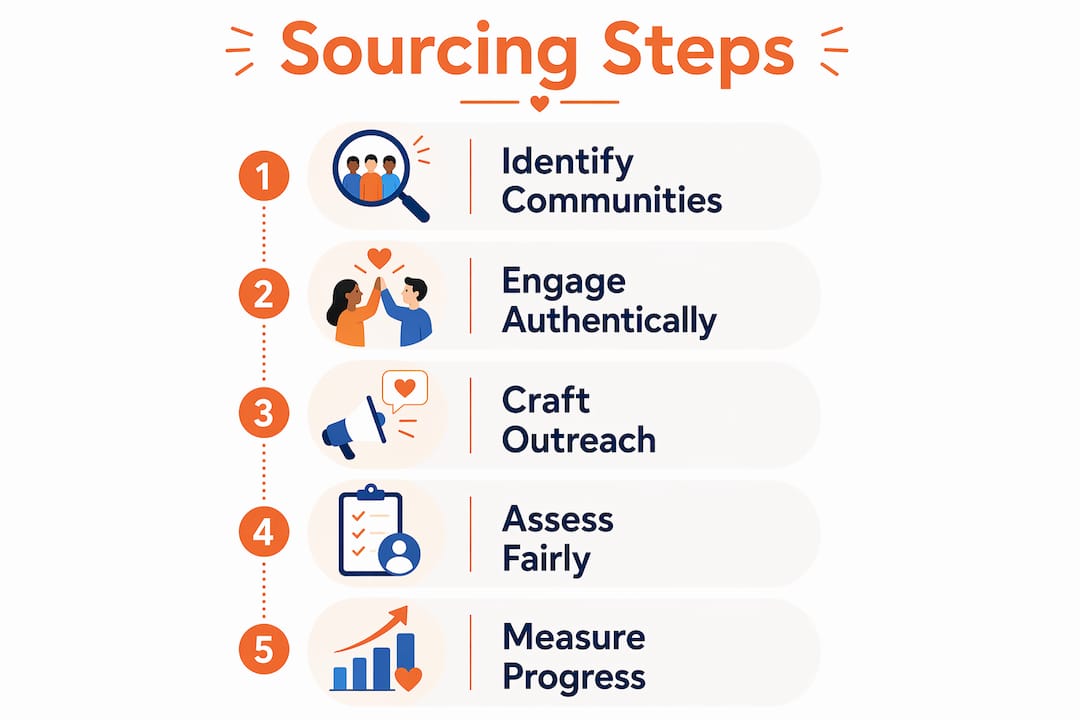
Passive candidates ignore generic messages. Personalized outreach that references a candidate’s specific work achieves 3–4 times higher conversion rates compared to generic messages, which average only 2–3% response rates. That gap is decisive. Referencing a GitHub project, a published article, or a conference talk shows the candidate you did the work to know who they are.

Inclusive language in outreach is not optional. Tools like Textio identify and flag exclusionary phrasing in job descriptions and messages. Phrases like “competitive environment” or “fast-paced culture” deter LGBTQ+ candidates who have learned to read those signals as indicators of a hostile or indifferent workplace. Removing that language is a minimum standard, not a differentiator.
Passive LGBTQ+ candidates are also evaluating your employer brand before they reply. They are not looking for rainbow logos in june. They are looking for tangible inclusion signals like explicit trans-inclusive healthcare policies, named LGBTQ+ employee resource groups, and visible LGBTQ+ leaders. Optics-heavy branding without substance reads as performative, and passive candidates recognize it immediately.
- Research the candidate specifically. Reference their actual work, a project, a post, or a contribution. Generic compliments do not count.
- State your inclusion credentials concretely. Name your LGBTQ+ ERG, your trans-inclusive benefits, or your HRC Corporate Equality Index score if you have one.
- Use correct pronouns and names. Check LinkedIn profiles and public bios before writing. Getting this wrong ends the conversation before it starts.
- Keep the message short. Two to three paragraphs maximum. Passive candidates are not waiting for your email. Respect their time.
- Follow up once. A single follow-up after seven to ten days is appropriate. Multiple follow-ups signal desperation and erode trust.
Pro Tip: Link to your organization’s LGBTQ+ friendly workplace profile or a specific inclusion policy page in your outreach. A direct link to evidence is more persuasive than any claim you can make in the message body.
What internal practices support fair sourcing of passive LGBTQ+ talent?
Sourcing is only as effective as the hiring process it feeds into. Passive LGBTQ+ candidates who enter a biased evaluation process will disengage, decline offers, or leave negative reviews that damage future sourcing efforts. The internal infrastructure has to match the external outreach.
Structured interviews with standardized rubrics and pre-defined competencies reduce recruiter discretion and limit the influence of affinity bias. Diverse interview panels that include LGBTQ+ employees send a visible signal that the organization practices what it communicates in outreach. Standardizing hiring packets so every candidate receives the same information also removes a common source of inequity.
Measurable diversity goals are the accountability mechanism. Tracking source-to-hire conversion rates by demographic group reveals which channels produce qualified LGBTQ+ candidates and which produce volume without results. Without that data, sourcing decisions stay anecdotal.
AI sourcing tools add another layer of fairness when configured correctly. AI tools that evaluate capability and skills rather than pedigree or employer brand surface diverse LGBTQ+ candidates who would otherwise be filtered out by credential-matching algorithms. The configuration matters as much as the tool itself.
What challenges come up when recruiting passive LGBTQ+ talent?
The most significant barrier is the visibility gap. Participation in LGBTQ+ benchmark programs like the HRC Corporate Equality Index dropped 65% in 2026. Passive candidates interpret that absence as corporate silence or fear, and they respond by avoiding those organizations entirely. You cannot source candidates who have already ruled you out.
Intersectionality compounds the challenge. 52% of queer students from racial and ethnic minorities report facing discrimination for their sexual orientation, a rate 10% higher than their peers from racial majorities. Recruiters who treat LGBTQ+ sourcing as a single-dimension effort will miss the most underrepresented candidates within the community.
Network homogeneity is a structural problem that most sourcing processes reinforce. When recruiters source primarily through existing employee referrals or LinkedIn connections, they replicate the demographic profile of the current workforce. Defining a role by 3–5 specific skills before sourcing begins breaks that cycle and opens the search to candidates who would never appear in a referral-based pipeline.
Passive LGBTQ+ candidates are not hiding. They are watching. They read your company’s public statements, check whether your leadership team includes out LGBTQ+ executives, and look for evidence that your inclusion commitments survive political pressure. The recruiters who reach them are the ones whose organizations have already done the visible work.
Ongoing recruiter training on inclusive language and unconscious bias is not a one-time event. Political and social climates shift, and the language and signals that communicate genuine inclusion evolve with them. Recruiters who treat inclusion training as a completed task rather than a continuous practice fall behind quickly.
Key Takeaways
Sourcing passive LGBTQ+ candidates requires authentic employer branding, skills-based criteria, personalized outreach, and structured internal processes that work together to build trust before any message is sent.
What I’ve learned about sourcing passive LGBTQ+ talent that most guides skip
The conventional advice on diversity sourcing focuses almost entirely on where to find candidates. The harder problem is what candidates find when they look back at you. I’ve seen well-resourced recruiting teams build sophisticated sourcing operations on myGwork and community platforms, then watch response rates collapse because the organization’s public record on inclusion didn’t hold up to a five-minute search.
Passive LGBTQ+ candidates are particularly skilled at this kind of due diligence. They have had to be. They check whether your LGBTQ+ ERG has a public presence, whether your executive team includes out leaders, and whether your benefits page explicitly covers gender-affirming care. The employer branding work has to precede the sourcing work, not run parallel to it.
The political climate in 2026 has made this more acute, not less. The 65% drop in HRC Corporate Equality Index participation is not just a statistic. It reflects a real shift in how organizations are positioning themselves publicly, and passive candidates are reading that shift in real time. Recruiters who work for organizations that have stayed visible and explicit about their inclusion commitments have a genuine sourcing advantage right now.
My practical recommendation is to audit your organization’s public inclusion record before you build a sourcing campaign. Fix what is broken or absent first. Then source. The order matters more than most recruiting guides acknowledge.
myGwork connects recruiters with passive LGBTQ+ talent directly
Reaching passive LGBTQ+ candidates through general job boards produces thin results. myGwork is built specifically for this purpose, connecting recruiters with LGBTQ+ professionals and allies in a space where inclusion is the baseline, not the pitch.
Recruiters on myGwork access a global network of LGBTQ+ professionals who are open to hearing from organizations that have demonstrated genuine commitment to inclusion. The platform supports job listings, networking events, mentorship programs, and employer branding tools that let your organization’s inclusion record speak before a recruiter ever sends a message. For HR professionals building a welcoming recruitment process for LGBTQ+ talent, myGwork provides the infrastructure to do it at scale and with credibility.
FAQ
What does sourcing passive LGBTQ+ candidates mean?
Sourcing passive LGBTQ+ candidates means proactively identifying and reaching out to LGBTQ+ professionals who are not actively job searching but may be open to the right opportunity. It requires targeted channels, personalized outreach, and visible inclusion signals rather than standard job postings.
Which platforms work best for finding passive LGBTQ+ job candidates?
Mygwork, Lesbians Who Tech, Out in Tech, and GitHub are the most effective platforms for reaching passive LGBTQ+ talent. These spaces surface candidates by community engagement and demonstrated skills rather than active job-seeking behavior.
How do I write outreach messages that engage passive LGBTQ+ candidates?
Reference the candidate’s specific work in the first sentence, name concrete inclusion policies rather than general diversity statements, and use correct pronouns and names. Personalized messages achieve 3–4 times higher response rates than generic outreach.
Why do passive LGBTQ+ candidates distrust generic diversity branding?
Passive LGBTQ+ candidates evaluate tangible signals like trans-inclusive healthcare, visible LGBTQ+ leadership, and active employee resource groups. Optics-driven branding without those specifics reads as performative and reduces the likelihood of a response.
How does structured interviewing support LGBTQ+ inclusive hiring?
Structured interviews with standardized rubrics and pre-defined competencies reduce affinity bias and create consistent evaluation across all candidates. Diverse interview panels that include LGBTQ+ employees reinforce the inclusion message delivered during sourcing.