
LGBTQ+ inclusive communication: 5 steps to support at work
April 6, 2026
Nearly 46% of LGBTQ+ workers remain closeted at work, a reality shaped in part by the language and behaviors they encounter every day. Non-inclusive communication is not just uncomfortable. It signals to LGBTQ+ colleagues that they do not fully belong, which directly affects wellbeing, engagement, and whether they stay. This guide walks you through the core principles, practical tools, and daily habits that help build a workplace where everyone can show up as themselves. Whether you are an LGBTQ+ professional, a manager, or an ally, these steps are designed to create genuine belonging, not just policy compliance.
Key Takeaways
Core principles of LGBTQ+ inclusive communication
Inclusive communication is the practice of using language and behaviors that respect every person’s gender identity, sexual orientation, and lived experience. It is not about perfection. It is about intentionality and a willingness to learn. When organizations get this right, the results are measurable. Inclusive communication boosts productivity, retention, and mental health across teams, not just for LGBTQ+ employees.
The key mechanics for inclusive communication include using gender-neutral language, normalizing pronoun sharing, and respecting both person-first and identity-first preferences. Person-first language puts the individual before the identity, for example, “a person who is transgender.” Identity-first language centers the identity, for example, “a transgender person.” Both are valid. The key is to follow the preference of the individual.
Some of the most common pitfalls are subtle. Using gendered terms like “ladies and gentlemen” or “you guys” excludes non-binary colleagues. Referring to “preferred pronouns” implies that pronouns are optional or a preference rather than a core part of identity. Assuming someone’s sexual orientation based on their appearance or relationship is another frequent misstep. These errors often happen without bad intent, but their impact is real. Investing in bias training for workplace inclusion can help teams recognize and correct these patterns systematically.
Here is a quick comparison of inclusive versus non-inclusive language choices:
Beyond language, inclusive communication also means creating space for people to share their identities without pressure. Efforts like pay transparency and visible support for LGBTQ+ colleagues reinforce that inclusion is organizational, not just interpersonal.
Key behaviors to build into your daily practice:
- Use singular “they” when someone’s pronouns are unknown
- Introduce yourself with your pronouns to normalize the practice
- Avoid making assumptions about relationships, family structures, or identity
- Consult an inclusive language guide when uncertain about terminology
Pro Tip: When starting a new working relationship, simply ask, “What pronouns do you use?” and share your own. This small act signals safety and respect immediately.
Tools and prerequisites: What you need for a supportive workplace
Good intentions need structure behind them. Before you can embed inclusive communication into your culture, you need the right policies, practices, and support systems in place. Think of these as the infrastructure that makes daily inclusive behavior possible and sustainable.

ERGs and ally training are among the most effective tools for building belonging. Employee Resource Groups give LGBTQ+ professionals a space to connect, advocate, and be heard. Ally training equips non-LGBTQ+ colleagues to act as informed, active supporters rather than passive bystanders. A support program workflow that combines both can boost retention by as much as 35%.
Here is a table summarizing the core tools and their functions:
Privacy and confidentiality are non-negotiable. Privacy and transition support must be handled with care, especially when an employee is transitioning or has not disclosed their identity to all colleagues. Never share someone’s identity without their explicit consent. This applies to managers, HR, and peers alike. The APA inclusive language guide offers detailed frameworks for navigating sensitive language situations with accuracy and respect.
Visibility also matters. Research shows that 84% of LGBTQ+ graduates say visible LGBTQ+ leaders influence their job choices. When leadership is visibly inclusive, it sends a powerful message that the organization’s values are real. Building employee networks for allyship at every level amplifies that message.
Essential prerequisites checklist:
- Pronoun-sharing option in email signatures and HR systems
- Documented privacy and confidentiality policy for identity disclosure
- At least one active LGBTQ+ ERG or ally network
- Manager training on inclusive language and transition support
- Regular review of onboarding materials for inclusive language
Step-by-step: Implementing inclusive communication in daily interactions
Knowing the principles is one thing. Applying them in real conversations, meetings, and emails is where most people need the most support. Here is a practical, step-by-step approach you can start using immediately.
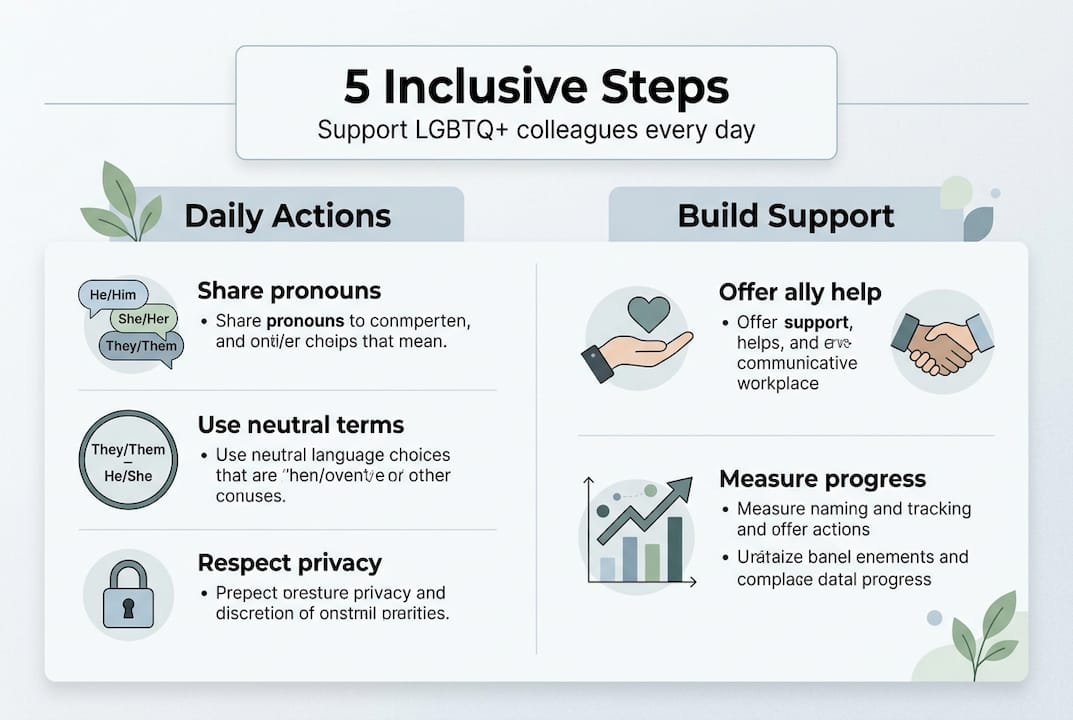
- Share your pronouns first. Normalize pronoun sharing by including yours in email signatures, meeting introductions, and name badges. This reduces the burden on LGBTQ+ colleagues to do so alone.
- Ask, do not assume. When you are unsure of someone’s pronouns or preferred terms, ask respectfully. “What pronouns do you use?” is direct and affirming. Never guess based on appearance.
- Use gender-neutral language by default. Replace gendered group terms with neutral ones. “Team,” “everyone,” and “folks” are easy substitutes that include everyone.
- Respect privacy rigorously. Outing someone at work is never acceptable, even with good intentions. If someone has shared their identity with you privately, that information is not yours to share.
- Correct mistakes quickly and move on. If you use the wrong pronoun or term, acknowledge it briefly, correct yourself, and continue. Lengthy apologies can make the moment more uncomfortable for the person affected.
- Follow the individual’s lead on terminology. Some people identify as queer; others find the term offensive. Some prefer identity-first language; others prefer person-first. The CDC preferred terms resource is a useful reference, but individual preference always takes priority.
Edge cases require extra care. Bi+ and pansexual identities are often made invisible in workplace conversations, even in otherwise inclusive environments. Avoid framing that assumes everyone is either gay or straight. Similarly, person-first vs identity-first preferences vary widely within the LGBTQ+ community, so self-identification is always the gold standard.
“The most inclusive thing you can do is listen more than you speak, and update your language when someone tells you what they need.”
Pro Tip: After a team meeting, do a quick self-check. Did you use gendered language? Did you assume anyone’s identity? Small, consistent reflections build long-term habits faster than any single training session.
Verification and impact: Measuring inclusivity in your workplace
Building inclusive communication practices is an ongoing process, not a one-time project. You need clear ways to measure whether your efforts are actually working, and the courage to act on what you find.
Start with data. Empirical data shows that 46% of LGBTQ+ workers are closeted at work, and a significant share report hearing derogatory jokes or lacking manager support. These numbers are your baseline. If your internal surveys reflect similar patterns, you have clear areas to address.
Effective metrics to track:
- Belonging scores from anonymous employee surveys
- Retention rates among LGBTQ+ employees compared to overall staff
- Participation rates in ERGs and ally training programs
- Number of reported microaggressions or inclusive language violations
- Visibility of LGBTQ+ leaders and mentors across levels
Here is a comparison of impactful versus surface-level approaches:
Sample survey questions to gauge progress: “Do you feel comfortable being yourself at work?” “Have you witnessed inclusive language being used by leadership in the past month?” “Do you know how to report a microaggression?”
Language itself evolves. Staying updated on evolving terms is part of the work. What was acceptable five years ago may now be considered outdated or offensive. Build in a regular review cycle, at least annually, to audit your organization’s language guidelines. The GLAAD glossary is an excellent resource for staying current.
Organizations that invest in Pride Month retention strategies see up to 25% better retention. That is not a coincidence. It reflects the direct link between genuine inclusion and employee loyalty. Championing LGBTQ+ talent at every level of your organization is both the right thing to do and a measurable business advantage.
Beyond basic steps: The uncomfortable truths most guides miss
Most inclusive communication guides stop at policy checklists and language swaps. That is necessary, but not sufficient. The harder truth is that microaggressions persist even in organizations with strong formal policies, because they are rooted in unconscious bias and social habit, not malice.
Allyship involves visible actions and challenging microaggressions in the moment, not just avoiding them yourself. That means speaking up when a colleague uses the wrong pronoun repeatedly, or when a joke lands at someone’s expense. Silence in those moments communicates acceptance.
Real change also requires humility. You will make mistakes. The goal is not to be perfect but to be consistent and open to correction. The organizations that build lasting trust with LGBTQ+ employees are the ones where leaders model this publicly, through employee networks and everyday interactions alike. Allyship is not a credential you earn once. It is a practice you maintain, and that distinction matters more than any policy document ever will.
Take the next step with myGwork’s inclusive workplace solutions
Building a truly inclusive workplace takes more than good intentions. It takes community, resources, and access to employers who share your values.
myGwork connects LGBTQ+ professionals and allies with inclusive jobs, networks, and mentors across the globe. Whether you are looking for an employer who walks the talk, seeking a community of peers who understand your experience, or building an inclusive team as an employer, myGwork is where that journey starts. Join thousands of professionals who are already shaping more equitable workplaces, one connection at a time.
Frequently asked questions
What is LGBTQ+ inclusive communication?
It means using language and behaviors that respect all gender identities and sexual orientations, including pronoun sharing and gender-neutral terms in everyday workplace interactions.
Which terms should I avoid to be inclusive?
Avoid gendered job titles and clinical terms like “homosexual”; the CDC preferred terms resource recommends using self-identified language and singular “they” as defaults.
How do I ask colleagues about their pronouns?
Ask directly during introductions or in email signatures; APA inclusive language guidance recommends never assuming and always using the pronouns a person has shared.
What if someone prefers identity-first language?
Honor their choice; the Victorian inclusive language guide affirms that individual preference always overrides general style rules.
How can companies measure inclusivity?
Track belonging scores, retention rates, and ERG participation; metrics for evaluating inclusivity also include regular pulse surveys and visible leadership support as key indicators.